By the Doormatic Editorial Team | Updated November 2026
Garage door rollers wear out faster than most homeowners expect — especially in GTA winters. This guide covers the three main roller types, what drives early failure in Ontario climates, and how to choose the right replacement for your door’s weight, cycle count, and noise requirements.
What Do Garage Door Rollers Do?
Rollers guide door panels along metal tracks during operation. Each has a wheel that runs inside the track and a stem that fits into the hinge, letting the door slide with minimal friction while distributing its weight — 130 to over 400 pounds — evenly when open. Without functional rollers, the entire door system works harder and wears faster.
What Are the Three Types of Garage Door Rollers?
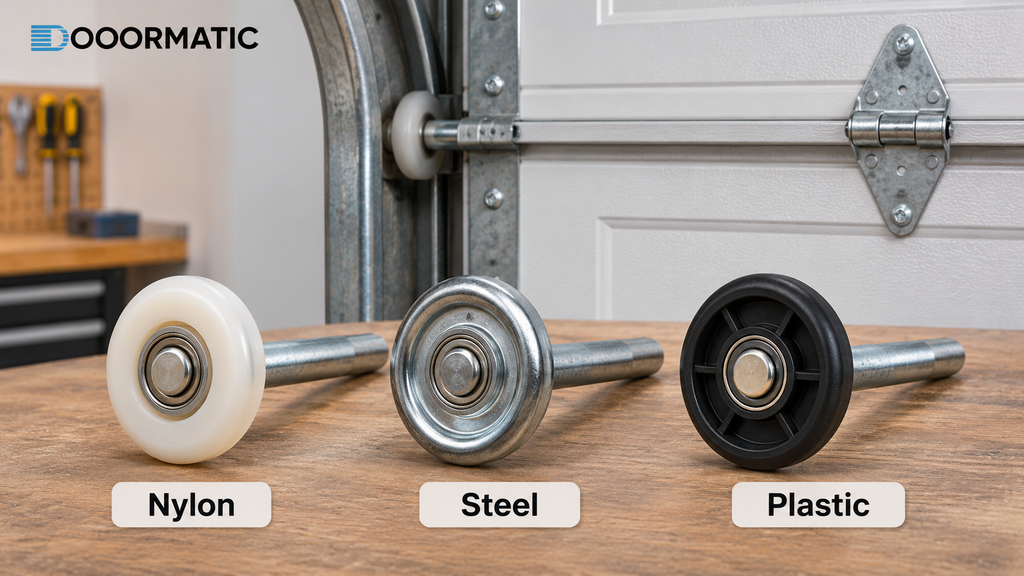
Nylon, steel, and plastic are the three main roller materials. Choosing the wrong type leads to premature failure, excessive noise, or binding.
Nylon rollers are the standard choice for most residential doors in the GTA. They run quietly, resist corrosion, and require minimal maintenance. Higher-end nylon rollers contain 10 to 13 sealed ball bearings that handle the moisture and road salt GTA winters deliver.
Steel rollers suit commercial and high-cycle applications — large, heavy doors that exceed the load range of residential nylon rollers. Strong, but they generate noise and rust without regular lubrication.
Plastic rollers are low-cost and common on builder-grade doors. They wear out faster than nylon or steel and are not suited to GTA freeze-thaw conditions.
| Roller Type | Best For | Noise Level | Maintenance |
|---|---|---|---|
| Nylon | Residential doors | Quiet | Minimal |
| Steel | Commercial/industrial | Louder | Regular lubrication |
| Plastic | Low-use, budget installs | Moderate | Frequent replacement |
When Do Garage Door Rollers Need Replacing?
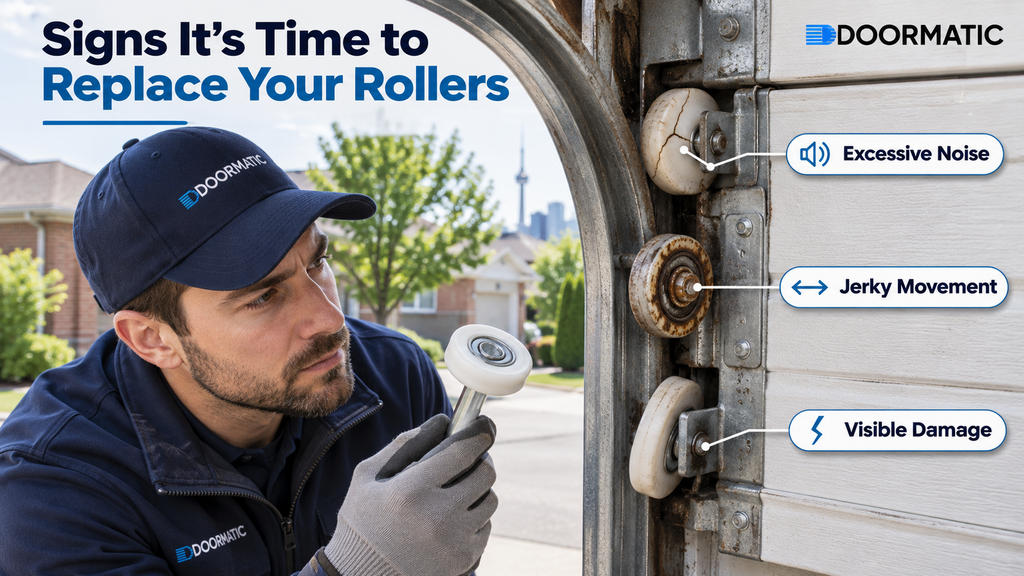
Replacement timing depends on roller type and cycle count. Sealed nylon rollers can last 10 to 15 years; basic plastic rollers typically wear out in 3 to 5 years. Replace any roller sooner if these signs appear:
- Excessive noise: squeaking or grinding signals worn bearings or a cracked nylon wheel in the track
- Jerky movement: the door hesitates or skips instead of gliding smoothly
- Visible damage: a cracked wheel, worn stem, rust on the bearings, or a roller that has popped out of the track
- Heavier door feel: worn rollers increase friction and strain the opener and springs
Debris in the tracks can also cause rollers to bind — clearing it is part of any proper assessment.
Why Do GTA Garage Door Rollers Fail Early?
Three factors drive premature roller failure across GTA properties.
Low-grade unsealed materials are the most common cause. Plastic rollers or steel rollers without sealed bearings absorb road salt and moisture. Once water gets into the bearing, rust follows quickly.
Improper lubrication accelerates wear. WD-40 and general-purpose sprays attract environmental grit and turn abrasive inside the bearing. Use a silicone spray or white lithium grease on the roller stem and bearing — not the track — twice a year.
Door misalignment puts uneven pressure on specific rollers, wearing them faster than the rest — the cause most homeowners miss.
How Do You Choose the Right Rollers for Your Door?
Match roller material and bearing count to door weight, cycle frequency, and moisture exposure.
For most residential doors, nylon rollers with sealed ball bearings are the right choice — sealed bearings hold up against GTA freeze-thaw cycles and salt exposure. For heavy commercial doors or high-cycle applications, steel rollers handle the load residential nylon cannot.
Confirm roller diameter and stem length match your existing hardware before ordering.
What Does Professional Roller Replacement Involve?
A garage door technician replaces rollers one hinge at a time, from the top of the door down. Each roller comes out when its hinge is unbolted; the new roller fits in, the hinge is reattached, and the work moves to the next.
Bottom bracket rollers are the exception. Those brackets sit under extreme spring tension — removing them without proper winding bars and training can cause serious injury.
A professional service also checks hinges, tracks, and cables during the same visit. Replacing all rollers at once keeps the door balanced across the full panel.
Key Takeaways
- Sealed nylon rollers can last 10–15 years; basic plastic rollers often need replacing in 3–5 years
- Nylon with sealed bearings suits most GTA residential doors; steel suits heavy commercial applications
- Low-grade materials, wrong lubricants, and door misalignment are the main causes of early failure
- Use silicone spray or white lithium grease on the stem and bearing twice a year — never WD-40
- Replace all rollers at once; bottom bracket work requires a professional with winding bars
Frequently Asked Questions
What are garage door rollers and why do they wear out?
Rollers guide door panels along metal tracks and bear the door’s weight — 130 to over 400 pounds. They wear from friction, moisture, and debris, faster with the wrong lubricant or a misaligned door.
How do I know if I have a broken roller on my garage door?
A broken roller shows up as grinding or squeaking noise, jerky movement, or a visible crack or pop-out at the track. Check rollers before assuming the opener or springs are the problem.
Are nylon rollers better than steel rollers for residential doors?
For most GTA residential doors, yes. Nylon with sealed bearings is quieter, resists rust, and needs minimal maintenance. Steel suits heavy commercial doors where load capacity and cycle count matter most.
Can I replace garage door rollers myself?
Replacing upper rollers is possible with the right tools. Bottom bracket rollers should only be replaced by a professional — those brackets are under extreme spring tension and can cause serious injury if released incorrectly.
How often should garage door rollers be lubricated?
Lubricate twice a year with a silicone spray or white lithium grease on the roller stem and bearing — never WD-40, which attracts grit and accelerates wear. Regular lubrication prevents friction and extends the life of the full door system.
Book Garage Door Roller Replacement With Doormatic
Doormatic replaces garage door rollers across Woodbridge, Vaughan, Toronto, North York, and the GTA.
For a free quote, call 416-722-6595, email info@doormatic.ca, or request a free estimate online. Based at 180 Trowers Rd, Unit 23, Woodbridge, ON L4L 8A6.
Related reading: How to lubricate a garage door · Garage door winter maintenance for Ontario homes · Garage door spring replacement cost in Ontario