A broken garage door spring is one of the most common — and dangerous — garage door failures. When a spring breaks, the door becomes much heavier and difficult to lift. The automatic opener mainly guides the door; it does not carry its full weight. Attempting spring repair yourself puts you at serious risk of injury. This guide gives you what you need to know — clear, practical answers, no fluff.
Doormatic provides professional spring replacement and garage door repair across Toronto, Mississauga, and the Greater Toronto Area.
What Does a Garage Door Spring Actually Do?
A garage door spring is a heavy-duty component that counterbalances the door’s weight, preventing it from crashing down due to gravity.
Garage door springs carry most of the door’s weight. Standard garage doors weigh between 130 and 400 pounds (59 and 181 kg). Without functioning springs, the opener cannot safely lift that load. Springs must be properly adjusted to balance the door’s weight — and they store dangerous potential energy while doing so.
What Are the Two Types of Garage Door Springs?
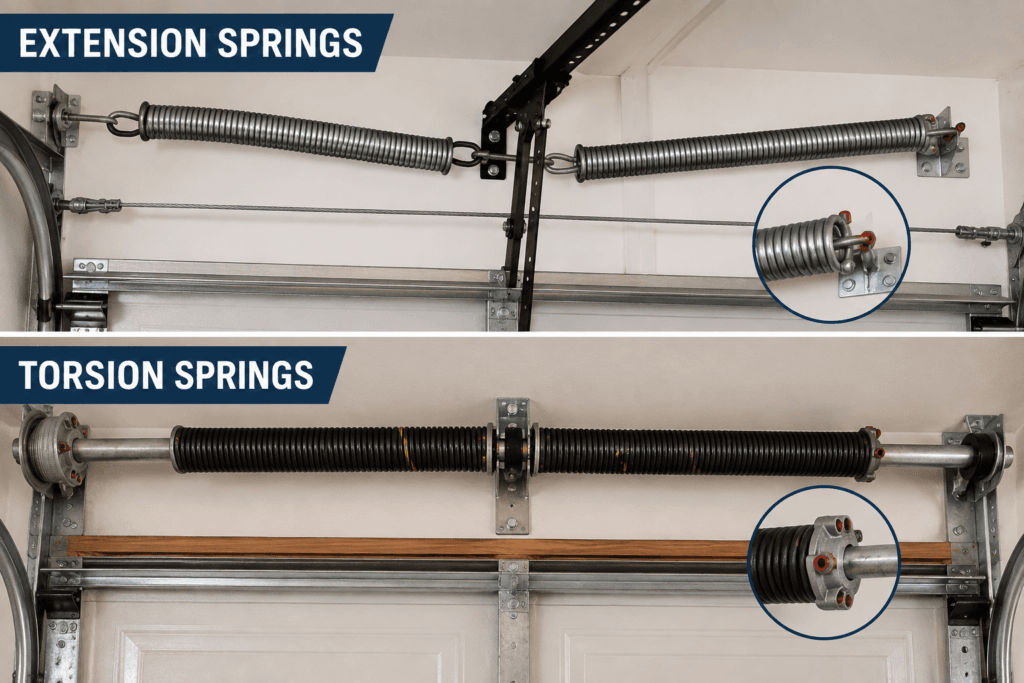
There are two main types: torsion springs, mounted above the garage door, and extension springs, located on either side of the door.
Torsion Springs
Torsion springs use torque to lift the door’s weight evenly from a shaft above the door opening. They are known for durability and safety. A visible gap in a torsion spring coil indicates it has broken. High-quality torsion springs last around 10,000 cycles — roughly 7 to 15 years depending on usage — with regular maintenance.
Extension Springs
Extension springs stretch and extend to assist lifting. They run parallel to the horizontal tracks on either side of the door. Extension springs are generally quieter than torsion springs but have a shorter lifespan. Regular inspections catch wear before failure.
What Are the Warning Signs of a Failing Spring?
Signs include a door that feels heavier than usual, loud snapping sounds, visible gaps in the spring coil, and the opener straining or failing to complete the lift.
Watch for:
- Loud bang: A broken spring may release stored energy suddenly — it often sounds like a gunshot from inside the garage
- Heavy door: When a spring breaks, the door becomes much heavier. Attempting to lift it manually risks injury
- Rapid drop: If the door drops rapidly, the springs may not be controlling the descent properly
- Visible gap: A gap in the torsion spring coil above the door confirms the break
- Struggling opener: The opener strains, slows, or fails to complete the lift cycle
Do not operate the door if any of these signs appear.
Why You Must Never DIY a Garage Door Spring Repair
Spring repair is not a safe DIY task. Springs store extreme mechanical energy under tension. A released spring can cause severe injury or death.
This is not a general caution. The Infrastructure Health & Safety Association (IHSA), Ontario’s construction and industrial safety authority, and the Ontario Ministry of Labour both classify garage door spring work as a high-risk mechanical task. It requires trained professionals with specialist winding bars and tensioning tools.
Risks of DIY spring repair:
- Snap injury: A torsion spring under tension can snap back with extreme, unpredictable force
- Winding bar recoil: Incorrect winding bar technique causes violent recoil during installation
- Improperly installed springs: Lead to uneven lift, premature wear, and future failure
- Door drop: An incorrectly tensioned spring causes the door to drop suddenly — a crush hazard for anyone standing below
Professional spring repair prevents injuries and ensures the door operates safely for its full service life.
What to Do When Your Spring Breaks
Stop using the door immediately. Disconnect the opener. Do not attempt to lift the door manually unless there is a genuine emergency.
Follow these steps:
- Stop all door operation. Do not use the opener or attempt to lift manually. The door is unsafe without functioning springs.
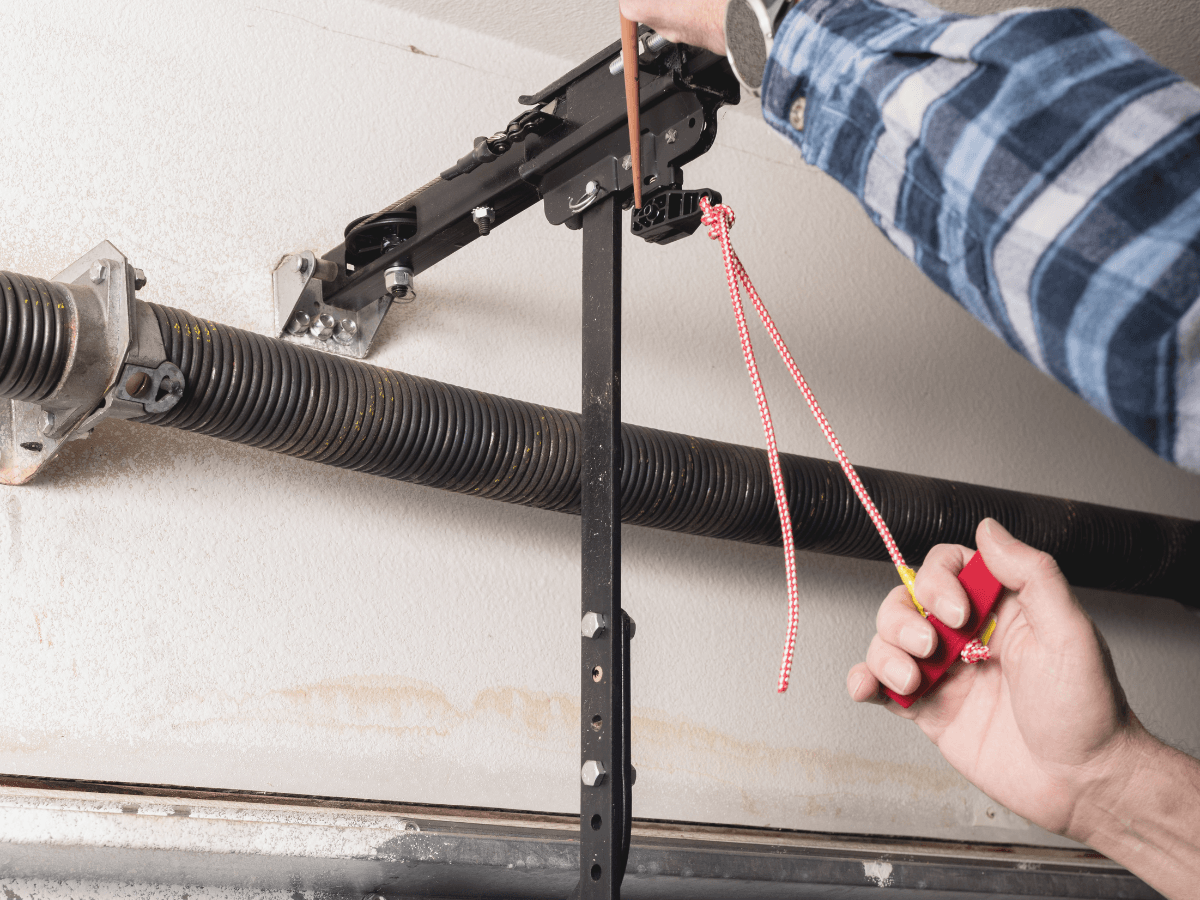
- Disconnect the opener. Pull the emergency release cord to prevent accidental activation.
- Secure the door. If the door is partially open, do not leave it unattended. A door without spring support can drop without warning.
- Call a certified technician. Contact Doormatic for same-day spring replacement across Toronto, Mississauga, and the Greater Toronto Area.
How Long Do Garage Door Springs Last?
The average lifespan of garage door springs is 7 to 15 years — or approximately 10,000 cycles. One cycle equals one full open and one full close.
A household using the garage door four times daily reaches 10,000 cycles in about seven years. Extension springs have a shorter lifespan than torsion springs. Quality torsion springs with regular maintenance last toward the upper end of that range.
Regular maintenance extends spring lifespan significantly. A technician checks spring tension, balance, and wear during a routine service call. Catching early wear prevents the sudden failure that leaves your door inoperable.
Why Doormatic for Spring Replacement in Toronto and Mississauga
Doormatic specialises in spring repair and replacement for residential and commercial garage doors across Toronto, Mississauga, and the Greater Toronto Area. Our certified team carries torsion and extension springs in stock for same-day repairs.
- Certified technicians on every spring repair job
- Torsion and extension springs in stock — fast response
- Same-day spring replacement across Toronto and Mississauga
- Regular maintenance and inspection plans available
- Workmanship warranty on every spring replacement
- Free quote — no hidden fees, transparent pricing
Frequently Asked Questions
How do I know if my garage door spring is broken?
The clearest sign is a loud bang from the garage — a broken spring releases stored energy suddenly. After the sound, the door feels extremely heavy and the opener struggles or fails to lift it. A visible gap in the torsion spring coil confirms the break. Call for same-day spring replacement rather than attempting to use the door.
Can I use my garage door with a broken spring?
No. A garage door with a broken spring is unsafe to operate. The door’s weight is no longer counterbalanced. The opener may strain and fail. The door can drop suddenly without warning. Disconnect the opener using the emergency release cord and call a certified garage door spring repair team immediately. Do not attempt to lift the door manually.
What is the difference between torsion springs and extension springs?
Torsion springs mount above the door on a horizontal shaft and use torque to lift the door’s weight evenly. Extension springs are located on either side of the door and stretch to assist lifting. Torsion springs are more durable. Extension springs have a shorter lifespan and require regular inspections. Both require professional spring repair or replacement when they fail.
How long does a garage door spring replacement take?
A professional spring replacement typically takes 1 to 2 hours for a standard residential garage door. This includes removing the broken spring, installing the correct replacement, calibrating tension, testing balance, and a final safety check. Doormatic carries torsion and extension springs in stock for same-day service across Toronto and Mississauga — no waiting for parts in most cases.
Is it worth repairing or replacing garage door springs?
Yes — always. A functioning spring system extends the life of the opener, rollers, and tracks by reducing mechanical strain. With regular maintenance, replacement springs last 7 to 15 years. Operating a door with a broken or worn spring accelerates wear across the entire system. Doormatic provides a workmanship warranty on every spring replacement — contact us for a free quote.
Conclusion
A broken garage door spring is not a DIY job. Springs store extreme energy under tension — improper handling causes serious injury. Stop using the door, disconnect the opener, and call a certified team for fast, safe spring replacement.
Doormatic’s technicians carry torsion and extension springs in stock for same-day repair across Toronto, Mississauga, and the GTA.
Contact Doormatic for a free quote on spring replacement and garage door repair. Call 416-722-6595, email info@doormatic.ca, or visit us at 180 Trowers Rd, Woodbridge, ON L4L 8A6.