In most cases, you do not need a permit to replace a front door in Ontario — provided the opening size stays the same and no structural changes are made. However, specific situations do trigger permit requirements. Knowing the difference protects your family, your investment, and your insurance coverage. This guide gives you what you need to know — clear, practical answers, no fluff.
Doormatic installs front doors, exterior doors, and patio doors across Toronto, Woodbridge, and the Greater Toronto Area. Our team handles the installation and any permit questions for every job.
When Is a Permit Required to Replace a Front Door in Ontario?
A permit is required when structural work is involved — such as changing the size of the opening, moving the door’s location, or altering the door frame in a way that affects the building envelope.
Under the Ontario Building Code (OBC), a like-for-like door replacement — same opening, same size, no structural modification — is typically exempt from permit requirements. The OBC defines this as “ordinary maintenance and minor repairs.”
However, a permit is required when:
- The rough opening size changes
- The door frame is structurally altered or the header is modified
- A new opening is created in an exterior wall
- The work involves installing new double doors where a single door existed
- Sidelights or transoms are added that require structural framing changes
When in doubt, contact your local municipality before starting work. Requirements vary by city. The City of Toronto Building Division provides clear guidance on when permits apply to exterior door replacement.
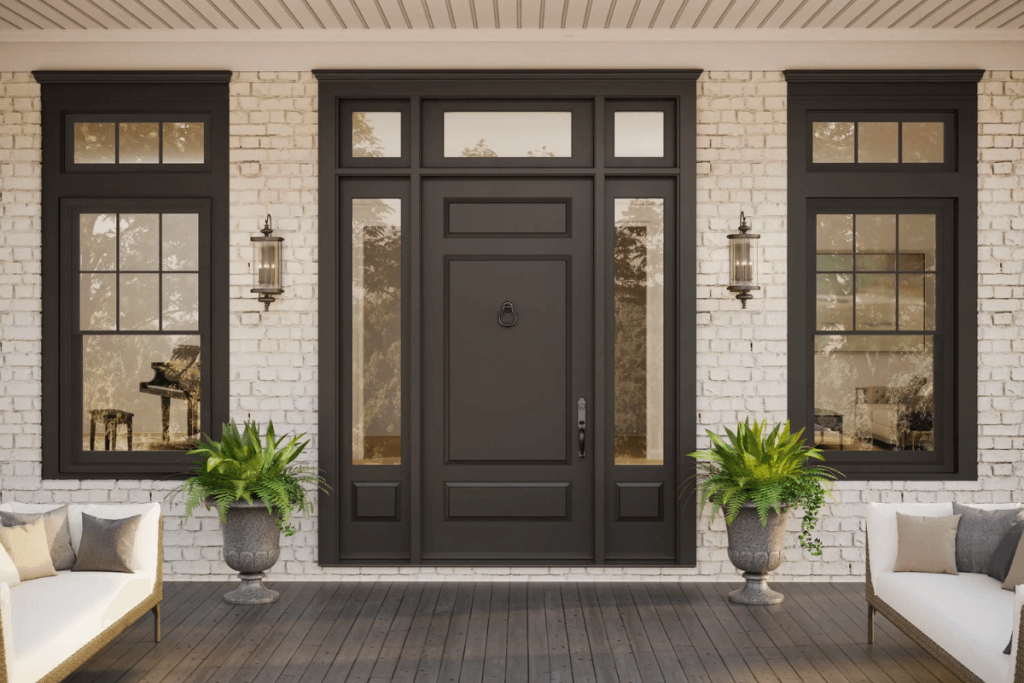
What Counts as a Like-for-Like Front Door Replacement?
A like-for-like replacement means installing a new entry door of the same size and type into the existing door frame — no structural changes, no new openings, no changes to the rough opening dimensions.
This is the most common scenario. An old steel, fibreglass, or wood door is removed and a new door of identical dimensions is installed. The door frame remains intact and no header modification is needed.
A like-for-like replacement does not require a permit in Ontario — it falls under routine maintenance. The work should still meet Canadian Standards Association (CSA) guidelines on weatherproofing and installation.
Replacing a door slab without changing the frame is often possible when the existing frame is sound. Your installer should assess the frame condition before ordering the new door slab. A damaged or rotted frame installed with a new door creates air leakage and long-term performance issues.
Does Adding Sidelights or Transoms Require a Permit?
Adding sidelights or transoms to an existing front entry door almost always requires a permit — because the rough opening must be enlarged and the structural header may need modification.
Sidelights are vertical glass panels next to the door. Transoms are glass sections above the door frame. Both add natural light and elegance to an entryway. Both typically require structural framing changes to install.
When the rough opening changes size, the header above the door must carry the new load correctly. This is a structural modification under the OBC — and it requires a permit. An improperly modified header creates long-term structural risk and can affect your home insurance coverage.
The permit process for sidelights and transoms is straightforward. Your installer submits plans to the local building department. An inspector confirms the work meets code before completion. This protects you, your family, and the long-term performance of your door system.
What Materials Are Best for a Replacement Front Door in Ontario?
Steel and fibreglass are the most practical choices for a replacement entry door in a Canadian home — both withstand Ontario’s extreme seasonal changes better than wood.
The three primary materials for front doors are steel, fibreglass, and wood. Each has a place:
- Steel doors: Durable, secure, and budget-friendly. Steel provides unmatched rigidity against forced entry. Steel doors provide reinforced construction for enhanced security. They are ideal for front entry doors on exposed or high-traffic entrances. Steel doors can dent and rust over time if the finish is compromised — regular inspection prevents long-term wear.
- Fibreglass doors: Fibreglass doors resist warping, cracking, and denting. They mimic wood without the maintenance. Fibreglass doors are available in a wide array of finishes and styles. Woodgrain textures complement traditional and contemporary architecture alike. Modern fibreglass doors provide very high security with reinforced structures.
- Wood doors: Solid wood doors offer natural beauty and moderate security. Wood doors require consistent maintenance to prevent warping and cracking through Canadian climates. For most Ontario homeowners, fibreglass or insulated steel delivers the same beauty with far better long-term performance.
Modern entry doors can last 20–30 years or more. Insulated cores reduce drafts and weather sealing enhances energy efficiency. Energy-efficient glass options are available for modern front doors with glass panels, sidelights, or transoms.
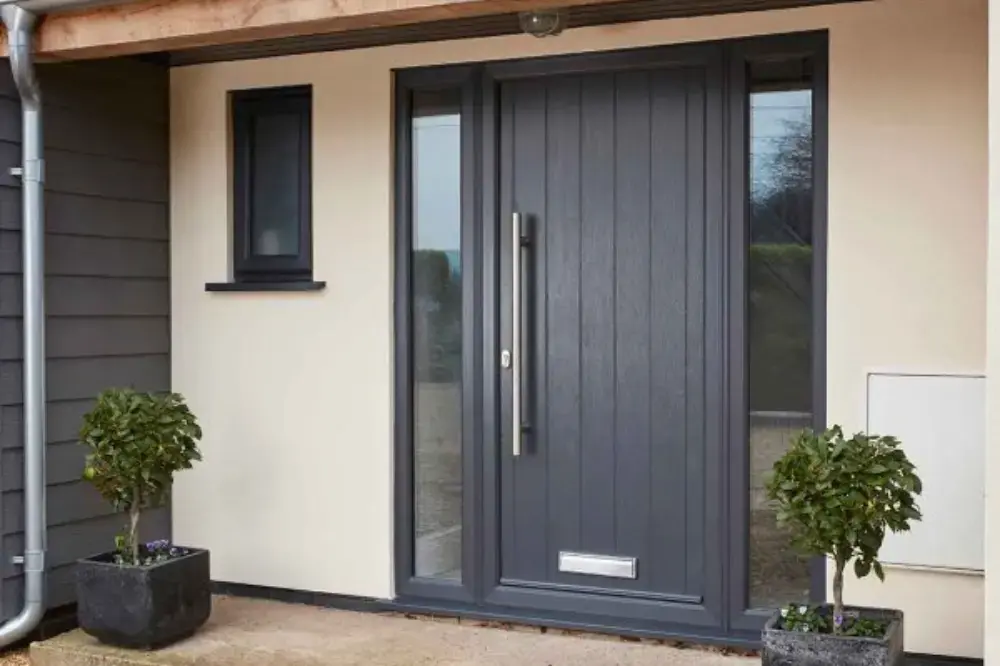
How Does Energy Efficiency Factor Into a Front Door Replacement?
Energy efficiency is one of the top priorities for any Canadian home front door replacement — a well-specified entry door significantly reduces heat loss, improves home comfort, and lowers energy bills.
ENERGY STAR Canada v5.0, effective January 2020, sets one national standard: U-factor ≤ 1.22 W/(m²·K) or ER ≥ 34. Canada’s previous three climate zone system was eliminated in that update. Specify doors with current ENERGY STAR Canada certification.
Insulated steel doors and fibreglass doors are practical choices for cold climates. Both materials are recommended for environments with extreme seasonal changes. Steel and fibreglass outperform older wood doors on energy efficiency when specified with insulated cores and quality weather sealing.
Glass inserts, sidelights, and transoms introduce natural light into the entryway. Modern glass options include Low-E coatings that minimize heat transfer while allowing light to pass through. Specify ENERGY STAR-rated glass where possible to maintain the door system’s overall thermal performance.
Do I Need a Permit If I’m Replacing a Front Door With a Different Style?
Changing from a slab door to one with sidelights, or from a single door to double doors, can trigger permit requirements if the rough opening changes.
Style changes within the existing frame — new panel pattern, different material, glass inserts within the existing slab size — do not require a permit. Any change that requires cutting into the wall or modifying the header does. Confirm the scope with your installer before ordering.
What Is the Role of the Installer in the Permit Process?
A professional installer advises whether a permit is required, helps prepare the application if needed, and ensures the work meets OBC standards.
In Toronto, permit responsibility can fall on the homeowner or their authorized agent — which can be the installer. Confirm this at the quoting stage. Doormatic advises on permit requirements for every job and confirms in writing whether a permit applies.
Can I Replace a Front Door Myself Without a Permit?
A like-for-like replacement is permit-exempt — but DIY installation carries risks that professional installation avoids.
A door must be correctly fitted, plumb, square, weatherstripped, and latched to perform safely. An improperly installed door binds, fails to seal, and can affect your home insurance coverage if a related claim arises. Professional installation ensures the door performs to specification from day one.
What Most Ontario Homeowners Get Wrong About Door Replacement Permits
The most common mistake is assuming no permit is ever needed. Proceeding without a required permit can void home insurance coverage and create problems at resale.
The second mistake is ignoring the frame. A new door in a rotted or poorly aligned frame fails at the frame. Always assess and replace the frame if needed.
The third mistake is choosing a door on appearance alone. In Ontario’s climate, energy efficiency, durability, and security must drive the specification. Aesthetics should complement those choices, not override them.
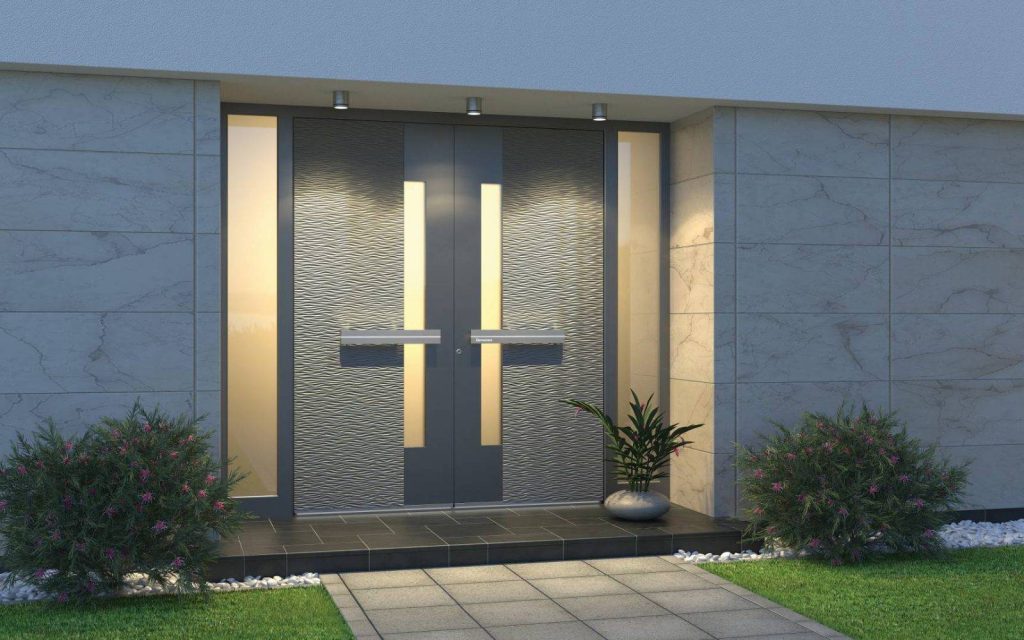
Why Doormatic for Front Door Installation in Ontario
Doormatic installs front doors, exterior doors, double doors, and patio doors across Toronto, Woodbridge, and the Greater Toronto Area — permit guidance, frame assessment, and full installation included.
- Experienced installers on every residential job
- Permit guidance included — we advise on when one is required
- Full door system installation: slab, frame, sidelights, hardware
- Steel doors, fibreglass doors, and wood doors in a wide array of styles and colours
- ENERGY STAR Canada v5.0-certified options for Ontario homes
- Workmanship warranty on every installation
- Free quote — no hidden fees, transparent pricing
Frequently Asked Questions
Do I need a permit to replace a front door in Ontario?
In most cases, no. A like-for-like replacement — same opening, no structural changes — is typically exempt under the Ontario Building Code as ordinary maintenance. A permit is required when the rough opening changes, the header is modified, or new framing is added for sidelights or transoms. Doormatic advises on permit requirements for every front door installation job.
Can I replace just the door slab without a permit?
Yes — if the frame is sound and the opening stays the same, replacing the door slab is typically permit-exempt in Ontario. Installers follow CSA guidelines on weatherproofing and installation regardless. Assess the frame before ordering a new slab — a damaged frame paired with a new exterior door reduces long-term performance and creates air leakage.
What is the best material for a front entry door in a Canadian home?
Fibreglass and insulated steel are the best choices for a Canadian home front entry door. Both resist Ontario’s freeze-thaw cycles, offer excellent energy efficiency, and require minimal maintenance. Steel doors provide maximum security and durability. Fibreglass doors resist warping and mimic wood beautifully. Wood suits homeowners who commit to regular maintenance for the natural beauty it provides.
Do glass inserts in a front door affect energy efficiency?
Yes — glass inserts reduce a door’s insulation value compared to a solid panel. Modern Low-E glass units minimize heat transfer significantly. Specify ENERGY STAR Canada-certified glass inserts for any exterior door replacement. Properly specified glass inserts balance natural light and energy efficiency without compromising the door system’s thermal performance.
Does replacing patio doors require a permit in Ontario?
Replacing a patio door in the same opening is typically permit-exempt in Ontario — the same rules as an entry door like-for-like replacement. A permit is required if the opening size changes or structural framing is altered. Patio doors should carry current ENERGY STAR Canada v5.0 certification. Doormatic installs patio doors and advises on all permit requirements.
Conclusion
In Ontario, a like-for-like front door replacement does not require a permit. Structural changes — enlarged openings, new sidelights or transoms requiring framing, or header modifications — do. Understanding the difference protects your home, your insurance, and your peace of mind.
Choose a steel door or fibreglass exterior door for long-term performance in Ontario’s climate. Specify ENERGY STAR Canada v5.0-certified products. Ensure proper frame assessment and professional installation to protect your Canadian home for 20–30 years.
Contact Doormatic for a free quote on front door installation across Toronto, Woodbridge, and the Greater Toronto Area. Call 416-722-6595, email info@doormatic.ca, or visit us at 180 Trowers Rd, Woodbridge, ON L4L 8A6.