For most Ontario homeowners, the belt drive opener is the better long-term choice — especially in attached garages with living spaces above or beside them. Belt drives run at 50 to 60 decibels compared to 70 to 80 for chain drives, last 15 to 20 years versus 10 to 15, and require almost no maintenance. Chain drives cost less upfront and remain a solid pick for detached garages where noise is not a factor. This guide breaks down exactly which system fits your home, your garage, and Ontario’s climate — so you can make the right call before spending a dollar.
Who this is for: Ontario homeowners replacing an old opener or choosing one for a new installation who want a straight answer, not a sales pitch.
Key Takeaways
- Belt drive openers operate at 50 to 60 decibels — chain drives run at 70 to 80 decibels
- Belt drives last 15 to 20 years; chain drives typically last 10 to 15 years
- Chain drives cost up to $100 less at purchase but require more ongoing maintenance
- If there is a bedroom or living space above or beside your garage, the belt drive is the right system
- Ontario’s freeze-thaw cycle accelerates chain wear — a factor most generic online guides ignore
- Both types support modern smart features including Wi-Fi connectivity, app control, and battery backup
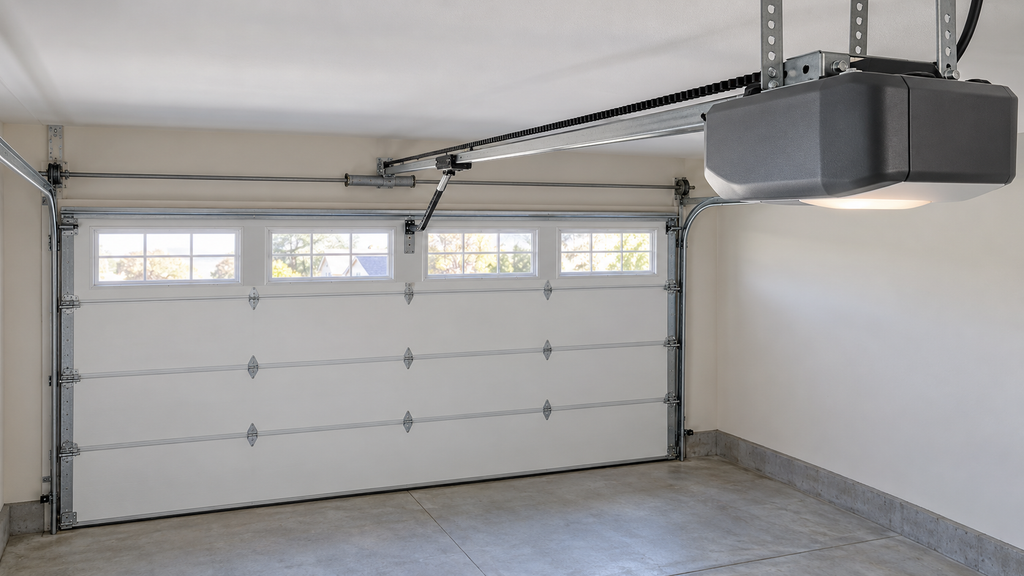
What the First Question Should Always Be
Before comparing specs, noise levels, or prices, there is one question that cuts through everything: is there a bedroom or living space directly above or adjacent to your garage?
That single answer shapes the entire recommendation. If yes, the belt drive opener is not a luxury — it is the obvious choice. If no — if you own a detached garage at the back of your property, or a garage that shares no wall or ceiling with a room anyone sleeps or lives in — then the chain drive remains a fully capable, cost-effective solution.
Everything else in this comparison matters, but nothing matters more than that first question. Keep it in mind as you read.
How Each Drive System Actually Works
Belt Drive Garage Door Openers
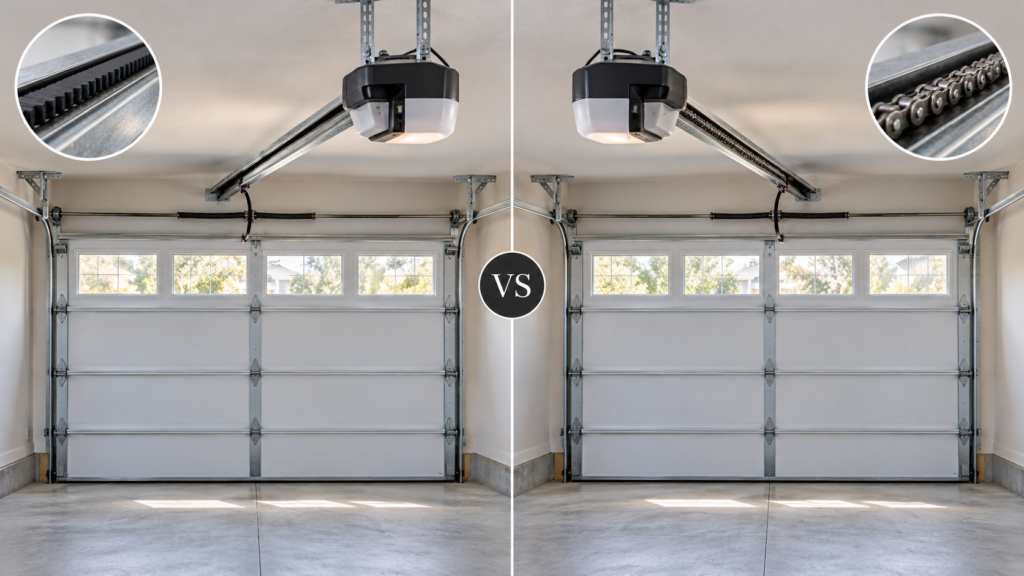
A belt drive opener uses a steel reinforced rubber belt — sometimes a fiberglass belt depending on the model — to move the trolley system along the rail and lift the door. When the motor turns, the reinforced belt transfers force smoothly and quietly. There is no metal-on-metal contact, which is exactly why belt drive systems are so much quieter than chain systems.
Modern belts are built to handle most residential doors without difficulty. Belt drive systems are available in configurations that handle heavy doors and oversized garage doors when matched to the right horsepower motor. The smooth operation is a direct result of the belt absorbing mechanical vibration rather than transmitting it through the rail into the structure of your home.
Chain Drive Garage Door Openers
A chain drive opener uses a heavy-duty metal chain — similar in concept to a bicycle chain but substantially heavier — to pull the trolley and move the door. The motor turns, the metal chain moves along the rail, and the door opens. It is mechanically straightforward, time-tested, and the reason chain drive remains popular: it works reliably and costs less to manufacture.
The trade-off is noise and vibration. Chain systems create noticeable mechanical noise at 70 to 80 decibels and transmit vibration through the rail and header bracket into whatever structure they are mounted to. In a detached garage, that vibration goes nowhere meaningful. In an attached garage sharing walls or a ceiling with your living spaces, you feel it and hear it every time the door opens.
What About Screw Drive Openers
Screw drive openers are a third option worth briefly acknowledging. They use a threaded steel rod rather than a belt or chain. They have fewer moving parts but can struggle in Ontario’s temperature extremes — the lubricant on the rod thickens in cold weather and thins in extreme heat, affecting smooth operation. For most Ontario homeowners, belt and chain drives are the more reliable choice across the full range of seasonal temperatures.
The Noise Difference Is Larger Than You Expect
Belt drive openers operate at approximately 50 to 60 decibels. Chain drive openers operate at approximately 70 to 80 decibels. That 15 to 25 decibel gap is not a minor increment — it is roughly the difference between a quiet conversation and a running vacuum cleaner.
If your garage shares a wall with a bedroom, or if there is a room above the garage where someone sleeps, a chain drive opener at 6 a.m. will wake people up. A belt drive at the same hour is barely noticeable. This is the single most practical difference between the two systems for the majority of Ontario homeowners in attached garages, and it is the reason approximately 58% of new garage door opener installations are now belt drives.
The vibration dimension compounds the noise issue. Chain systems transmit mechanical vibration directly through the rail and into the building structure. If your entire garage sits beneath a bedroom, you feel the chain drive as much as you hear it. Belt systems absorb that vibration in the reinforced rubber belt, which is why belt drive models are the go-to choice wherever quiet operation matters.
Ontario’s Climate Makes Chain Maintenance More Demanding
Here is something most online guides — written for a general American audience — do not address: Ontario’s freeze-thaw-freeze cycle affects your garage door opener system in ways that matter when choosing between belt and chain.
Ontario winters put concrete through repeated freeze-thaw cycles. Garage floor slabs shift. Thresholds heave. A perfectly level threshold in October can develop a noticeable lip by March. That heaving creates uneven stress on the door’s weight distribution, which puts additional load on whatever drive system is pulling it. More stress means faster wear, and chain systems are more susceptible to accelerated wear than belt systems under these conditions.
Chain drives attract dust and grit. In Ontario attached garages, vehicles track in road salt and fine particulate matter through the winter months. That salt-laden grit works its way into chain links and accelerates wear beyond what you would see in a milder climate. Chain drives require lubrication every six to twelve months under normal conditions. In an Ontario environment with consistent salt intrusion from vehicles, skipping lubrication leads to worn gears, a stretched chain, and eventual failure.
Belt drives do not attract grit the same way. The steel reinforced rubber belt requires a tension adjustment after roughly seven to ten years — and that is essentially the full extent of its maintenance demands. In Ontario’s specific environment, that difference in ongoing upkeep has real value over the life of the opener.
Cost Over the Life of the Opener
Belt drive models are typically priced up to $100 more than comparable chain drive packages at purchase. In Canada, a quality chain drive opener generally runs in the range of $200 to $350, while comparable belt drive units typically run $280 to $450, depending on horsepower and features. Professional installation adds to both, and prices vary by region and installer.
Chain drives are often chosen for their lower initial cost, and that is a rational decision in the right context. The full picture looks different when you account for lifespan and maintenance.
Belt drive openers last 15 to 20 years with proper care. Chain drive openers typically last 10 to 15 years. Over a 20-year period, a chain drive homeowner is likely replacing their opener at least once more than a belt drive owner. Add in the cost of periodic chain lubrication and the professional installation for that extra replacement cycle, and the extra cost of the belt drive at purchase becomes modest by comparison.
For a detached garage where noise is not a concern and budget is the priority, a chain drive is a legitimate, cost-effective choice. For an attached garage with living spaces above or beside it, the belt drive earns back its price difference through longevity, reduced maintenance, and the daily quality-of-life improvement of quiet operation.
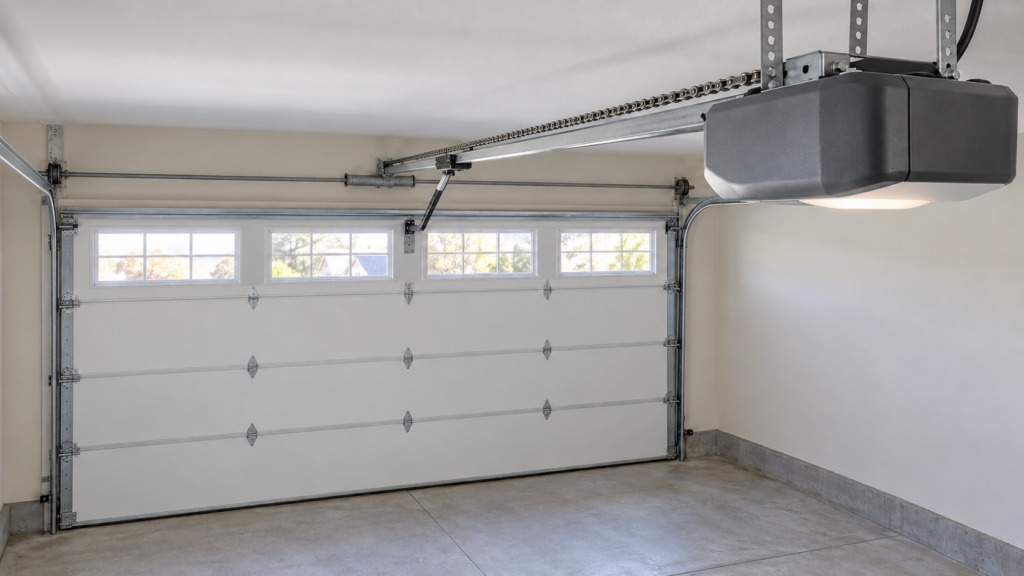
Which One Is Right for Your Garage
Belt Drive Opener for Attached Garages
If your garage is attached to your home — sharing a wall, ceiling, or floor with any living space — the belt drive opener is the clear recommendation. This is especially true if there are bedrooms above the garage or directly beside it. Belt drives are preferred for homes with bedrooms nearby precisely because quiet operation is not optional in that configuration; it directly affects the sleep and daily comfort of everyone in the house.
The whisper quiet operation of a belt drive in an attached garage is the kind of improvement homeowners notice from day one. It is also why belt drive systems now account for the majority of new residential installations across Ontario.
Chain Drive Openers for Detached Garages
When your garage is a separate structure from your home, the chain drive remains a solid, dependable choice. The noise and vibration of a chain system simply do not travel into your living spaces when the garage is detached. Chain drive openers are built for strong lifting power and dependable performance under regular use, and in a detached garage used as a workshop or storage space, the ruggedness of a metal chain drive is an asset.
If budget allows, even a detached garage benefits from the reduced maintenance and longer lifespan of a belt drive. But if the choice comes down to cost, the chain drive in a detached garage application is not a compromise — it is the right fit.
Handling Oversized and Heavy Doors
Both belt and chain drive openers handle oversized garage doors and heavier garage doors when properly matched to the door’s weight. The key specification is horsepower — a ½ HP or ¾ HP motor handles most standard residential doors, while heavier doors may require a higher-rated unit. The drive type does not determine lifting power; motor size does. A belt drive opener with the right motor handles heavy doors without any difficulty.
Smart Features, Battery Backup, and Modern Technology
Both belt drive and chain drive openers are available with the full range of modern technology. Wi-Fi connectivity, app control, remote control, photo eye sensors, and battery backup are features of the opener unit itself — not the drive system. Whichever drive type you choose, you can get a current opener with smart features that let you open and close the door remotely and check your garage status from your phone.
Battery backup deserves specific mention for Ontario homeowners. Power outages during winter storms are a genuine local reality, and a battery backup-equipped opener ensures your garage door continues to operate even when the power goes out. Both belt and chain drive models are available with battery backup — check the specifications of whichever unit you are considering, as not all entry-level models include it as standard.
Safety sensors — including photo eye sensors that reverse the door if an obstruction is detected — are standard on all modern openers regardless of drive type. Safety features at this level are not a differentiator between belt and chain drives; they are a baseline expectation on any current opener.
How Much Upkeep Does Each Type Require
Belt drives require virtually no maintenance compared to chain drives. The steel reinforced belt needs a tension adjustment after seven to ten years of use, and that is essentially the full maintenance profile. No lubrication. No cleaning of metal components. No grit accumulation.
Chain drives require lubrication every six to twelve months. The metal chain attracts dust and road salt particulate — especially in Ontario attached garages where vehicles bring in winter contaminants. Without regular lubrication, the chain wears faster, the motor works harder, and the system ages ahead of schedule. This is not difficult maintenance, but it is recurring maintenance that requires attention to keep the system performing as it should.
For homeowners who prefer a set-it-and-forget-it approach to their garage door opener, the belt drive’s maintenance profile is a meaningful practical advantage. For homeowners who are diligent about periodic maintenance and keep the right lubricant on hand, the chain drive’s demands are entirely manageable.
Frequently Asked Questions
Is a belt drive vs chain drive garage door opener worth the price difference in Ontario?
For an attached garage with living spaces above or beside it, yes. Belt drive openers cost up to $100 more at purchase but last 15 to 20 years versus 10 to 15 for chain drives, run 15 to 25 decibels quieter, and require significantly less maintenance. In Ontario’s climate, where road salt grit accelerates chain wear, the price difference is recovered over the lifespan of the system.
Which is better for a detached garage — belt drive or chain drive?
Chain drive openers are a strong, cost-effective choice for a detached garage. When the garage shares no wall or ceiling with living spaces, noise and vibration are not practical concerns. Chain drives offer dependable performance and strong lifting power at a lower initial cost, making them the sensible option for detached garage applications.
Does a belt drive garage door opener work on heavy doors?
Yes. Both belt drive and chain drive openers handle heavy and oversized doors when matched to the correct horsepower motor. Drive type does not limit lifting power — motor size does. A properly specified belt drive opener handles heavier garage doors without performance compromise.
Do belt drive and chain drive openers both support battery backup?
Yes. Battery backup is a feature of the opener unit, not the drive system. Both belt and chain drive models are available with battery backup, which is worth prioritising in Ontario given winter storm power outages. Confirm battery backup is included before purchasing, as entry-level units sometimes omit it.
How does Ontario’s climate affect a chain drive garage door opener?
Ontario’s freeze-thaw cycle causes concrete shifting and threshold heaving that adds uneven stress to the door system. Chain drives are more affected than belt drives because the metal chain attracts the road salt grit that vehicles bring into the garage through winter, accelerating wear when lubrication is not maintained on schedule. This makes the chain drive’s maintenance requirements more consequential in Ontario than in milder climates.
What should I look for in a current door opener with smart features?
Wi-Fi connectivity and app control are the most practical smart features to look for. Being able to check whether your garage is open and close the door remotely has genuine daily utility. Battery backup and photo eye sensors should be standard on any modern opener you consider. Both belt and chain drive models are available with these features — your drive type choice does not limit your access to current smart technology.
Contact Doormatic for a free quote on garage door opener installation across Woodbridge and the Greater Toronto Area. Call 416-722-6595, email info@doormatic.ca, or visit us at 180 Trowers Rd Unit 23, Woodbridge, ON L4L 8A6.