A misaligned garage door sensor is the most common reason a closing garage door reverses or refuses to close. Realignment is a simple fix most homeowners complete in minutes. This guide gives you what you need to know — clear, practical answers, no fluff.
Doormatic serves Toronto and the GTA with professional garage door repair and installation.
What Are Garage Door Safety Sensors?
Garage door safety sensors are infrared beam devices that prevent the door from closing on children, pets, or vehicles.
Two sensors — a sender and receiver — mount on opposite sides of the door frame and project an invisible infrared beam. If blocked, the door reverses immediately. Safety reversal sensors (entrapment-protection sensors) are mandatory for automatic garage door openers under ANSI/CAN/UL 325, the North American standard referenced in the Canadian Electrical Code (CSA C22.1). Most garage door sensors last between 10 and 15 years.
Why Is My Garage Door Sensor Not Working?
A blinking light on your garage door opener is the most common sign of a sensor problem.
Four issues account for most sensor failures:
- Misalignment: One sensor shifts out of position, breaking the beam.
- Dirty lens: Dirt, dust, or spiderwebs block the infrared beam.
- Damaged wires: A cut or pinched wire interrupts the signal to the opener.
- Physical damage: A knocked sensor or cracked housing requires replacement — repair is not sufficient.
Self-diagnostic LEDs show sensor status — solid green means aligned; blinking or off indicates an error.
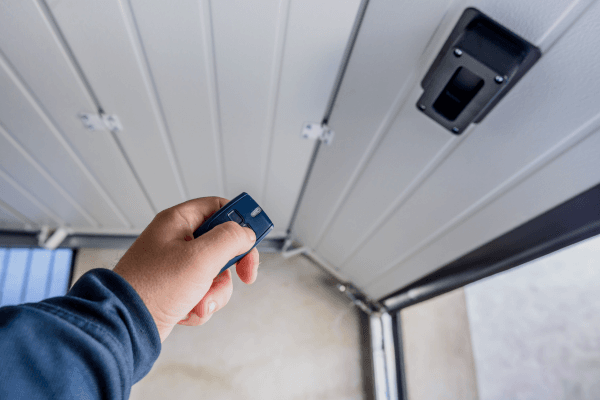
How to Realign Garage Door Safety Sensors: Step by Step
Realigning garage door safety sensors takes under 10 minutes and requires no specialist tools.
Step 1 — Check the path. Remove objects or debris blocking the sensor beam.
Step 2 — Loosen the mounting bracket. Loosen — do not remove — the wing nut on each bracket.
Step 3 — Set correct height. Sensors must be mounted no more than 6 in (15 cm) above the ground — ANSI/CAN/UL 325 sets this as a maximum, not a fixed target. Confirm both sides are at the same height.
Step 4 — Clean the lens. Wipe both lenses with a dry cloth before aligning. Dirty lenses cause misreads even when sensors are physically aligned.
Step 5 — Align the sensors. Point sensors at each other until the receiver LED turns solid green. Hold in position and tighten.
Step 6 — Test the door. Press the opener. The closing garage door should complete its path without reversing. Repeat Step 5 if needed.
When Should You Replace Garage Door Sensors?
Replace sensors when cleaning and realignment do not restore normal operation, or when physical damage is visible.
Reliable infrared photo-eyes are essential safety features — weather-resistant housing protects sensors from the elements, but cracks or lens damage warrant replacement, not repair. Sensors must match the garage door opener manufacturer — confirm compatibility before purchasing. Most are sold individually or as pairs.
Why Doormatic for Garage Door Sensor Repair
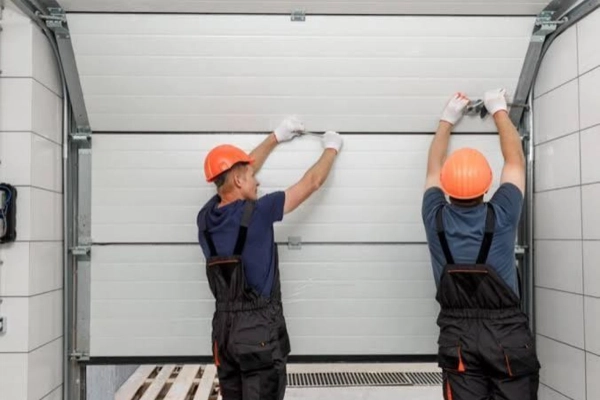
If realignment and cleaning don’t resolve the issue, a certified technician can diagnose whether wiring damage or sensor failure is the cause.
Frequently Asked Questions
Why do garage door safety sensors keep blinking?
A blinking light on garage door safety sensors indicates misalignment or a blocked beam. Check for objects, dirt, or damaged wires. Loosen the bracket, realign until the LED turns solid, then retighten. Continued blinking after cleaning and realignment means the sensor likely needs replacement.
How high should garage door sensors be installed?
Under ANSI/CAN/UL 325, sensors must be mounted no more than 6 in (15 cm) above the ground — this is a maximum, not a fixed target. Mounting lower is acceptable. Both sensors must be at the same height. Uneven placement causes alignment issues even when both units are undamaged.
Can I realign garage door safety sensors myself?
Yes. Loosen the mounting bracket, adjust the sensor until the receiver LED turns solid green, then retighten. Clean both lenses before testing. If the closing garage door still reverses after realignment, the issue may be a damaged wire or failed sensor — contact a professional rather than continuing to adjust.
How long do garage door sensors last?
Most garage door sensors last 10 to 15 years. A consistently blinking or unlit LED on a correctly aligned sensor indicates replacement is needed. Replace both sensors simultaneously if both are near end of service life.
Do I need to replace both sensors at once?
Not always — but replacing both is recommended when one fails due to age or damage. Sensors must match the garage door opener manufacturer for compatibility. A mismatched replacement model causes communication errors. If sensors are over 10 years old, replace the pair for consistent, reliable garage door safety.
Conclusion
A misaligned or dirty sensor is the first thing to check when a garage door refuses to close. Clean the lens, mount both sensors no more than 6 in (15 cm) above the ground, and align until the LED turns solid green. Most issues resolve in under 10 minutes. If the door still reverses after all six steps, a damaged wire or failed sensor is likely — both require professional repair.
Contact Doormatic for professional garage door sensor repair and replacement — same-day service available across Toronto and the GTA. Call 416-722-6595, email info@doormatic.ca, or visit 180 Trowers Rd, Woodbridge, ON L4L 8A6.