By the Doormatic Installation Team | Certified Garage Door & Entry Door Specialists Serving Woodbridge and the Greater Toronto Area
A garage door will not close has one of eight causes — most fixable in minutes, two require a technician immediately. This guide covers every cause, ranked by frequency, with clear DIY-or-call guidance for Ontario homeowners. Doormatic’s certified technicians serve Woodbridge and the GTA with garage door repair same day.
Key Takeaways
- Most closing failures trace to sensors, obstructions, or limit settings — all DIY-friendly
- Broken springs remove all counterbalance from a door weighing 150 lb or more — never touch them yourself
- Safety sensors must be no more than 6 in (15 cm) above the floor and pointing directly at each other
- Worn rollers and poor lubrication cause most grinding and squealing complaints on garage doors
- Professional attention is required for springs, cables, logic board faults, and track damage
Most Likely Causes, Ranked
Causes 6–8 require a technician — do not attempt them yourself.
| Rank | Symptom | Cause | DIY or Call? |
|---|---|---|---|
| 1 | Door reverses at floor | Sensor misalignment | DIY |
| 2 | Door reverses mid-travel | Obstruction in path | DIY |
| 3 | Door stops short of floor | Limit setting off | DIY |
| 4 | Noisy garage door operation, door won’t seal | Worn rollers / loose hardware | DIY |
| 5 | Remote works, wall button doesn’t (or vice versa) | Opener/wiring fault | DIY → Call |
| 6 | Door heavy, won’t stay up | Broken springs | Call immediately |
| 7 | Door off-track, uneven movement | Damaged cables or track | Call |
| 8 | Opener runs but door doesn’t move | Logic board or motor fault | Call |
Diagnose It Yourself
Work through checks in order — cheapest first.
Check 1 — Safety Sensors
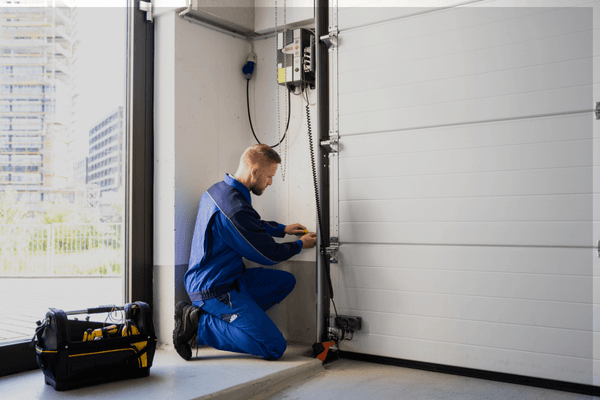
What to look at: Both sensors sit at the base of each door track. The sender has a steady amber LED; the receiver shows a steady green LED. A blinking or off LED means misalignment or a blocked lens.
Obstructions in the door’s path trigger the automatic reverse — even a cobweb is enough. Clean both lenses with a dry cloth. If still blinking, loosen the bracket wing nut, adjust until the green LED turns solid, and retighten.
If the green LED is solid but the door still won’t close, see Garage door sensor not working — how to realign it for wiring checks.
Check 2 — Obstructions and Track
What to look at: Walk both tracks. Look for objects, dirt, a bent section, or a protruding bolt. Blocked tracks can physically jam the door mid-travel.
If this is the cause
Remove the obstruction. If a track section is bent, loosen the mounting bolts, tap back with a rubber mallet, and retighten. If the track is cracked or the door is off its rollers, stop — call a technician.
Parts and cost
Track brackets: $8–$25 each. Roller set (DIY): $15–$40. Track realignment by technician: assessed on inspection.
Safety stop
Do not force an off-track door. Engage the emergency release only if safe, then call.
Check 3 — Travel Limit Settings
What to look at: If the door stops 2–6 inches above the floor and reverses, the travel limit is set too short. Adjustment screws are on the side or rear of the opener motor unit — check your manual. Misconfigured travel limits are a common garage door problem that looks more serious than it is. Make one quarter-turn on the “close” limit screw and test after each adjustment.
When to Stop and Call Someone
Stop immediately if:
- The door is extremely heavy when lifted manually — broken springs remove all counterbalance from the door’s weight
- You hear a loud bang from inside the garage — a spring snapping
- The door moves unevenly or one side drops faster — damaged cables
- The opener runs but the door doesn’t move — motor or logic board fault
Never attempt spring or cable adjustment yourself — springs release stored energy violently. For garage door repair in Woodbridge and the GTA, Doormatic responds same day.
See also: how to fix a garage door that won’t close properly and Broken garage door spring — what to do and why not DIY.
What the Repair Costs
| Fault | Typical Range | DIY? |
|---|---|---|
| Sensor realignment | $0 (self) / $75–$120 (tech) | Yes |
| Limit adjustment | $0 (self) / $75–$100 (tech) | Yes |
| Roller replacement | $40–$120 | Yes |
| Track realignment | $100–$200 | Partial |
| Spring replacement | $180–$350 | No |
| Cable replacement | $100–$200 | No |
| Opener logic board | $150–$300 | No |
| Full opener replacement | $400–$750 installed | No |
GTA market rates. Doormatic provides written quotes before work begins.
How Doormatic Diagnoses It in Woodbridge
When a technician arrives, the diagnostic takes 20–40 minutes:
- Visual check — sensors, tracks, rollers, springs, cables, and hardware inspected in sequence
- Powered cycle test — door cycled with force-resistance checked at mid-travel and floor
- Root cause confirmed — underlying cause identified, not just the symptom
- Written quote — provided before any repair begins, no hidden fees
- Same-visit repair — most garage door problems resolved in one visit
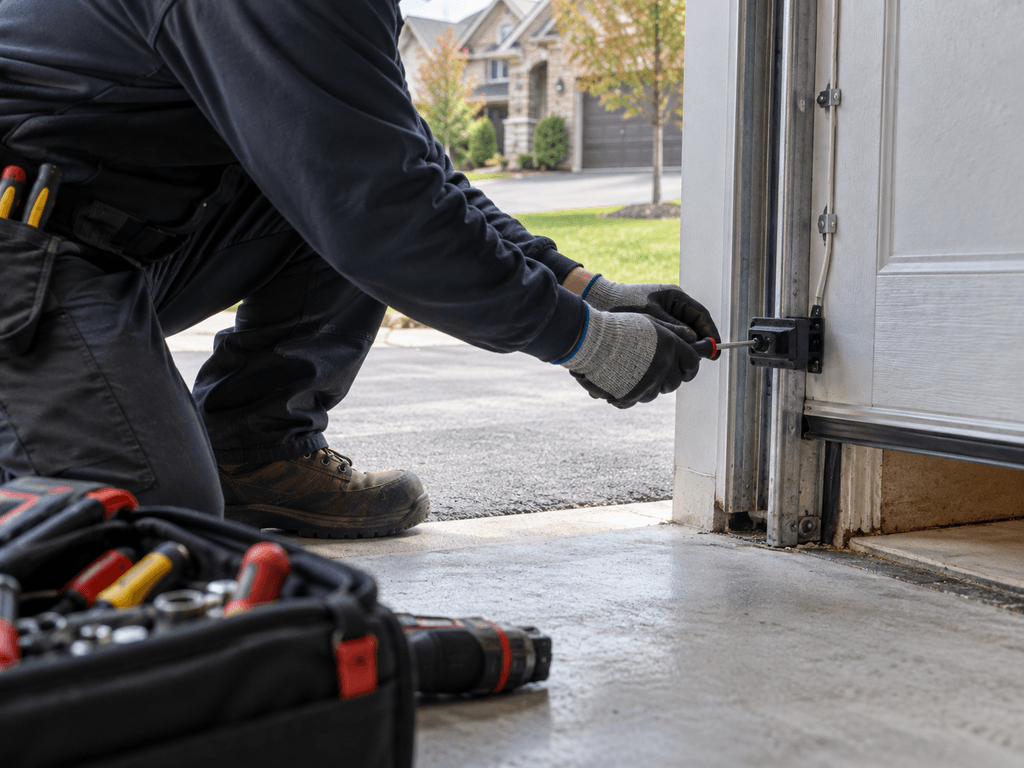
Routine maintenance reduces garage door problems. Lubrication with a silicone based lubricant on moving metal parts — hinges, rollers, and springs — reduces friction and extends service life.
Frequently Asked Questions – Garage Door Will not Close
Why won’t my garage door close when the light comes on?
The opener has power but the close command is failing. Most likely cause: sensor misalignment. Check both sensor LEDs — blinking or off confirms it. Clean the lenses and realign until the green LED turns solid. If lights are solid and it still won’t close, check the travel limit adjustment screws on the opener.
What are the most common garage door problems that stop it closing?
Sensor misalignment, path obstructions, and incorrect limit settings cause most closing failures. Worn rollers and loose hardware cause grinding, squealing, and incomplete door sealing. Broken springs and damaged cables are less common but require a technician immediately — never attempt spring or cable repairs yourself.
Can a new garage door opener fix a door that won’t close?
Sometimes. If the opener’s logic board or motor has failed, a replacement resolves it. But if the cause is a broken spring, misaligned track, or damaged cable, a new garage door opener won’t help. A technician identifies the underlying cause before recommending replacement.
When the door opens fine but won’t close — what does that mean?
Almost always the safety sensors. Sensors only trigger on the close cycle, not the open. If the door opens fine but reverses on closing, check the sensor LEDs at the base of both tracks. A blocked or misaligned sensor is the cause in most cases. Clean, realign, and test.
About Doormatic
Doormatic is a Woodbridge-based garage door company serving the GTA. Our certified technicians handle sensor realignment, spring replacement, opener installation, and full garage door repair — same-day service. We’ve helped thousands of Ontario homeowners resolve garage door problems.
Service Area
Doormatic serves Woodbridge, Vaughan, North York, Toronto, Mississauga, Brampton, Richmond Hill, Aurora, and King City. 180 Trowers Rd Unit 23, Woodbridge, ON L4L 8A6 · 416-722-6595 · info@doormatic.ca.
Next Step
Book a same-day diagnostic if the checks above haven’t resolved the issue. Garage door repair — Woodbridge and the GTA.