Choosing the right garage door comes down to five decisions in order: material, insulation (R-value), size and headroom, style and windows, then budget and installer. This post walks through each step for Ontario homeowners replacing an old door or selecting one for a new build.
Key Takeaways
- Steel suits most Ontario homes; wood composite for traditional styles, aluminium glass for modern builds.
- R-value matters most in an attached garage — it directly affects heat loss and energy bills.
- Measure rough opening, side clearance, and headroom before ordering.
- Style and windows matter for curb appeal — match the door to the home’s existing architecture.
- Improper fitting leads to costly repairs; professional installation is always the better call.
1. Choose Your Material
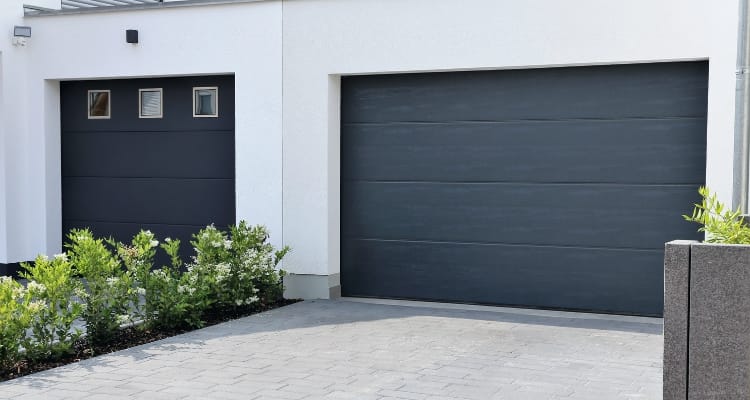
Material is the most consequential decision, because it determines how the door performs in Ontario’s climate over its full lifespan.
Steel is the most popular and practical garage door material in Ontario. It handles the freeze-thaw cycles and humidity swings of a Toronto-area winter reliably, holds its shape without swelling or warping, and comes in a wide range of designs and colours. Steel is available at a lower price point than other materials and requires less maintenance than wood.
Wood composite offers traditional warmth without the maintenance demands of solid wood, which needs regular refinishing to resist moisture damage. A solid wood door on an exposed Ontario garage will require stripping and repainting every few years; a wood composite door retains the aesthetic without the same upkeep.
Aluminium with glass suits contemporary builds — lightweight, low-maintenance, and visually distinctive. The trade-off is thermal performance: aluminium conducts cold readily, and glass panels add natural light while reducing the door’s insulation value.
Fibreglass is a mid-range option that mimics wood grain, resists moisture and corrosion, and requires less maintenance than either solid wood or steel in a coastal or highly humid environment. For most Ontario GTA homes, steel remains the more cost-effective choice.
Decision: For most GTA homes, start with steel. Move to wood composite for a classic look, aluminium glass for a contemporary one, or fibreglass where moisture resistance is the priority.
2. Get the Insulation (R-Value) Right
R-value measures thermal resistance — the higher the number, the better the door insulates. It matters most in a garage attached to a living space, where cold air infiltration raises heating costs and affects comfort through the shared wall.
An uninsulated steel door performs poorly in a GTA winter. Cold air moves straight through the panel and the frame, raising the heat load on the adjacent room. An insulated door — polyurethane foam core rather than polystyrene — slows that transfer significantly.
Polyurethane foam provides better insulation per inch than polystyrene and fills the door cavity more completely. A two-layer steel door with a polystyrene core is better than nothing; a three-layer door with a polyurethane core performs noticeably better.
Decision: Aim for R-12 to R-18 for an attached garage with living space above or beside it. Standard insulation suits a detached garage used only for vehicle storage.
3. Size and Headroom
Sectional garage doors — the most common design in North America — require headroom above the opening for the overhead tracks. Standard vertical tracks need 3 to 4.5 inches of side room and 12 to 15 inches of headroom above the opening. If the ceiling is lower, a low-headroom kit or a wall-mount (jackshaft) opener is the right call.
Getting the size wrong delays installation and may require additional modification work to the rough framing. Confirm rough opening width and height, side clearance, and available headroom before ordering.
Single-car garage doors are typically 8, 9, or 10 feet wide by 7 or 8 feet tall. A 9 × 7 is the most common residential size. A 10-foot width gives extra clearance for trucks and SUVs with wide mirrors. Double-car doors typically measure 16 feet wide. For a full breakdown of standard Canadian dimensions, see garage door sizes in Canada.
Decision: Book a free on-site measurement before ordering. Doormatic offers free measurement with no obligation.
4. Style and Windows
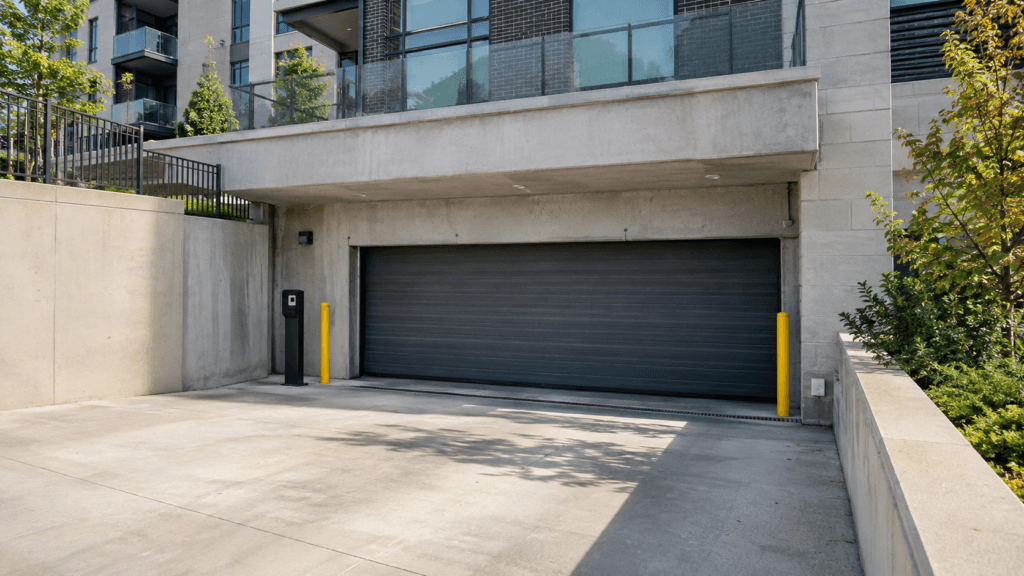
A garage door should match the architectural style of the house, not just look good in isolation. A raised-panel steel door suits a traditional or colonial facade; a flush panel works better on a contemporary build; a carriage-house style reads well on older brick homes throughout Woodbridge and Vaughan.
Colour is a practical consideration, not just an aesthetic one. A dark door absorbs heat; in a south- or west-facing garage this can warp panels and fade finish faster than a lighter colour in the same position. Many steel doors come in factory finishes — white, beige, and brown are the most forgiving for Ontario sun exposure.
Window inserts add natural light inside the garage. Frosted or textured glass provides daylight without exposing the garage interior from the street. From an insulation standpoint, windows reduce the door’s overall R-value, so they’re better suited to detached garages than attached ones where heat loss is already a concern.
Decorative hardware — hinges, handles, and straps — can be added to steel or composite doors to give the look of a traditional carriage-house door at a fraction of the cost of a real carriage-house unit.
Decision: Match panel profile and window style to the house’s existing architecture. Confirm colour compatibility with the home’s exterior before ordering.
5. Cost and Installer
Based on published Ontario market rates from HomeStars Canada:
- Non-insulated single steel, installed: $1,000–$1,800 CAD
- Insulated single steel, installed: $1,500–$4,000 CAD
- Wood composite single, installed: $2,500–$4,500 CAD
- Double door (all materials), installed: $2,500–$6,500 CAD
A new garage door opener adds $400–$900 CAD for a standard unit, more for wall-mount or smart openers. For a full breakdown, see garage door opener installation cost in Ontario.
Professional installation ensures the door is fitted, sealed, and balanced correctly. A door that’s out of balance transfers excessive strain to the opener and wears out springs faster. Ignoring alignment issues leads to costly repairs and reduces the door’s working life.
For a full cost breakdown by material and size, see how much a new garage door costs in Ontario.
Frequently Asked Questions
What type of garage door handles cold weather best?
An insulated steel door with a polyurethane foam core and full perimeter weather seal handles Ontario winters best. The foam core slows heat transfer through the door; the weather seal prevents cold air from entering around the edges. Cold weather causes metal components to contract, so regular lubrication of hinges, rollers, and springs — every six months — prevents small issues from becoming costly repairs.
How do I choose a garage door that matches my home’s style?
Start with the house’s architecture. A raised-panel door suits traditional or colonial homes; a flush or modern panel works on contemporary ones. Carriage-house styles work well on older brick homes. Window style, colour, and hardware should match the home’s existing exterior. Doormatic’s team can walk you through options for garage doors in Brampton and across the GTA.
Does the colour of a garage door matter?
Yes, for durability and appearance. Darker colours absorb more heat, which can accelerate paint fade and panel warping on south- or west-facing doors that receive direct sun. Lighter colours and factory finishes generally hold up better in Ontario’s climate. Confirm that the colour you choose is available in a factory-applied finish rather than a field-painted option, which won’t weather as well.
What is the difference between a two-layer and three-layer garage door?
A two-layer door has a steel skin backed by a layer of insulation (typically polystyrene). A three-layer door adds a second steel skin on the inside, which adds rigidity, reduces noise, and holds the insulation more securely. Three-layer doors with polyurethane cores outperform two-layer polystyrene doors on both thermal performance and long-term durability.
When does a garage door opener need replacing?
If your opener is over 10–15 years old, makes grinding or inconsistent sounds, or lacks safety sensors, replacement is typically the better call. A new opener with battery backup and smart connectivity improves security and reliability through Toronto winters. For a full breakdown of opener costs, see garage door opener installation cost in Ontario.
Get a Garage Door Quote From Doormatic
Doormatic measures, supplies, and installs garage doors across Brampton, Woodbridge, Vaughan, and the GTA.
Call 416-722-6595, email info@doormatic.ca, or request a free estimate online. Based at 180 Trowers Rd, Woodbridge, ON L4L 8A6.