A garage door that won’t close is a security risk. Most causes are straightforward: misaligned sensors, blocked photo eyes, broken springs, or a faulty opener. Some fix in minutes; others need a professional. This guide gives you what you need to know — clear, practical answers, no fluff.
Doormatic provides garage door repair and installation across Toronto, North York, and the Greater Toronto Area. Our experienced technicians deliver fast response and reliable service on every call.
Cause 1: Misaligned Safety Sensors
Misaligned sensors are the most common reason a garage door won’t close — the infrared beam is broken, so the door reverses as a safety measure.
Check both sensors at the base of the door track. A blinking LED means misalignment. Loosen the bracket, adjust until solid, and retighten. Clean both lenses with a dry cloth.
Under ANSI/CAN/UL 325, referenced in Canada’s Electrical Code (CSA C22.1), safety sensors are mandatory on all automatic garage door openers and must be mounted no higher than 6 in (15 cm) above the ground.
Cause 2: Obstructed Photo Eye Beam
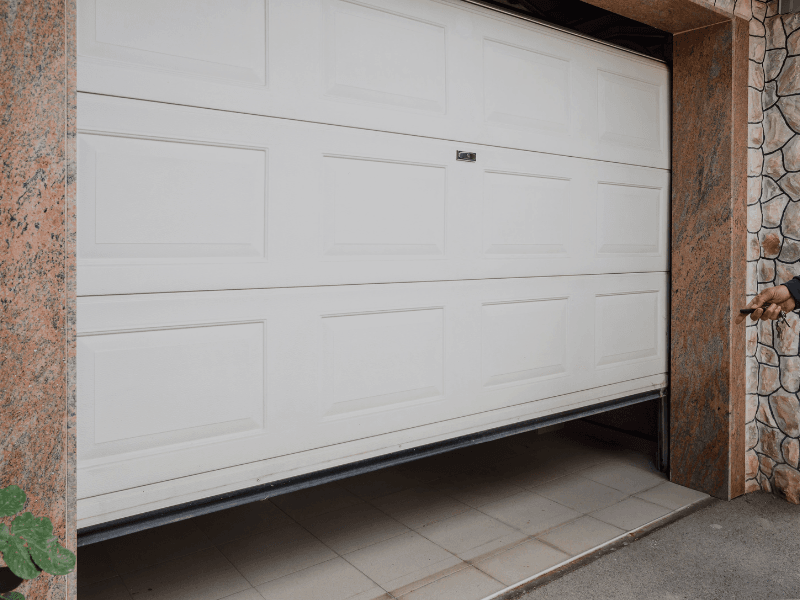
An object in the sensor’s path — dirt, a leaf, or a box — breaks the infrared beam and stops the door from closing.
Remove any objects between the sensors. Even small debris triggers the safety reversal. This is the easiest fix — under a minute. If the path is clear, check sensor alignment and wiring (Cause 1).
Cause 3: Broken Spring
A broken spring is a serious mechanical failure — the door system is unbalanced and the opener cannot safely close the door.
A loud bang followed by a door that won’t move usually means a broken spring. A visible gap in the torsion spring coil above the door confirms it.
Do not attempt repair. The Infrastructure Health & Safety Association (IHSA) and Ontario Ministry of Labour classify spring work as high-risk. Disconnect the opener using the emergency release cord. Call for same-day emergency repair.
Cause 4: Incorrect Limit Settings
Incorrect travel limit settings tell the opener the door has reached the ground before it actually has — causing it to reverse.
If the door reverses near the ground with no visible obstruction, limit settings are the likely cause. Consult your opener’s manual for the limit adjustment screws. Make small adjustments and test after each turn.
Cause 5: Damaged or Misaligned Tracks
Bent or misaligned tracks prevent the door from travelling smoothly — the door binds, sticks, or reverses mid-travel.
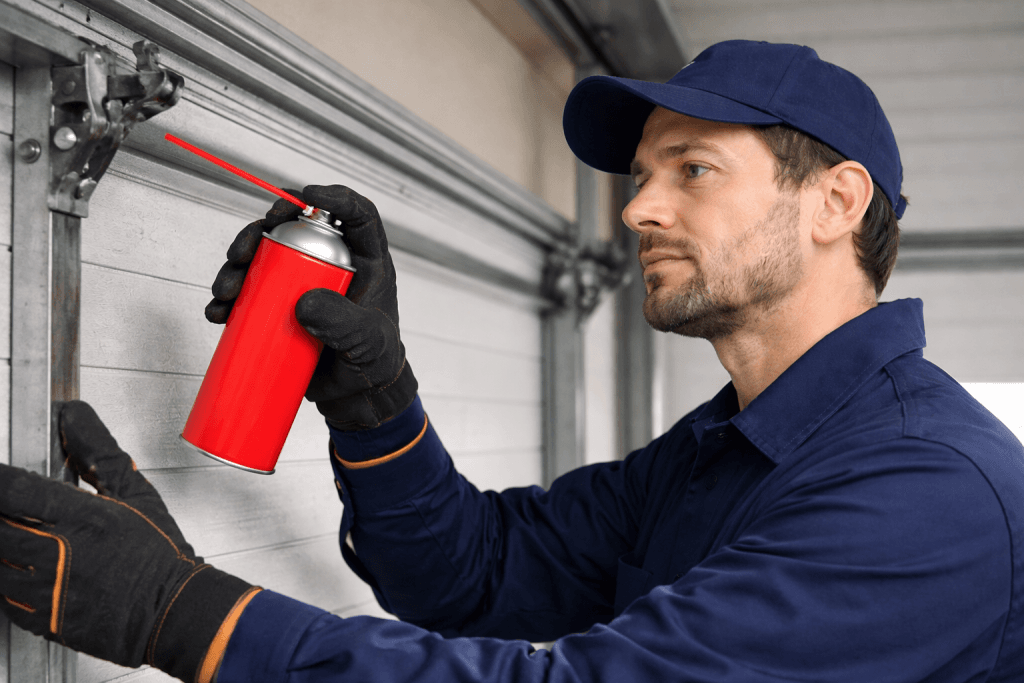
Inspect both tracks for bends or gaps. Minor misalignment: loosen the bolts, tap into position, and retighten. Significant damage requires a professional door service call. Lubricate rollers twice yearly.
Cause 6: Faulty Garage Door Opener
A failing opener — worn motor, faulty circuit board, or weak remote signal — may send an incomplete close command.
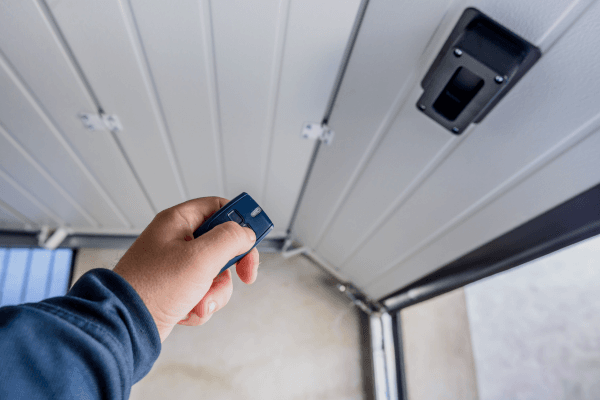
Test the wall button separately from the remote. If the wall button works and the remote doesn’t, replace the battery. If neither works, the opener needs professional assessment. If your opener is over 10 years old and failing repeatedly, replacement is more economical than continued repair.
Cause 7: Remote or Wall Button Failure
A dead remote battery or faulty wall button can prevent the close command from reaching the opener.
Replace the remote battery and test. If the wall button fails too, check the wiring at the opener head unit. A loose wire is often the culprit. If wiring is intact and the opener still doesn’t respond, the logic board may have failed.
What to Do If You Can’t Identify the Cause
If none of the seven causes resolve the issue, the problem is likely internal — failed logic board, worn drive, or electrical fault. These require professional garage door repair. Attempting repairs without training risks injury and voids the warranty.
Annual maintenance prevents these failures. Garage door cables last 8 to 15 years. Regular inspections catch spring and track wear early.
Why Doormatic for Garage Door Repair in Toronto
Doormatic provides garage door service across Toronto, North York, and the GTA — repair, installation, sales, and maintenance.
- Fast response and emergency services across the GTA
- Experienced technicians — free quote, fair pricing
- Garage door repair, garage door sales, garage door installation, and commercial garage doors
- Workmanship warranty on all repairs and installations
Frequently Asked Questions
Why does my garage door keep reversing before it closes?
A reversing garage door almost always means a sensor issue or an incorrect travel limit. Check both sensors at the base of the door track — a blinking LED means misalignment. Clean the lenses and readjust until the LEDs turn solid. If it still reverses after that, adjust the travel limit on your garage door opener per the manufacturer’s manual.
Is it safe to repair a garage door spring myself?
No. Garage door spring replacement must be done by professionals. Springs store extreme mechanical energy — improper handling causes serious injury. The IHSA and Ontario Ministry of Labour classify this as a high-risk task requiring specialist tools. Call a certified door company immediately for any spring-related garage door repair. Never attempt it yourself.
How do I know if my garage door opener needs replacing?
Your garage door opener likely needs replacing if it’s over 10–15 years old, fails repeatedly, or lacks modern safety features. A professional garage door service call includes a full inspection of the opener and door systems. Doormatic’s technicians advise honestly on whether repair or full replacement is the more economical option for your situation.
Does Doormatic offer emergency services for garage doors in Toronto?
Yes. Doormatic provides emergency services for garage door repair across Toronto, North York, and the Greater Toronto Area. A stuck or malfunctioning door is a security issue that can’t wait. Our experienced team offers fast response for emergency calls — call directly for the quickest response. Same-day service is available across the GTA.
How often should I get a garage door service inspection?
Annual inspections by a certified technician are recommended for all garage door systems. A professional inspection covers springs, cables, rollers, sensors, and the opener. Garage door cables typically last 8 to 15 years — catching wear early prevents costly emergency breakdowns. Ask about our maintenance plans when requesting a free quote from Doormatic.
Conclusion
Most garage door closing problems trace to one of seven causes — misaligned sensors, obstructed photo eyes, broken springs, incorrect limit settings, damaged tracks, a faulty opener, or a failed remote. Start with the simplest checks first. Call a professional when springs, electrical components, or significant track damage are involved.
A well-maintained garage door system protects your home and family year-round.
Contact Doormatic for a free quote on garage door repair and installation across Toronto, Woodbridge, and the Greater Toronto Area. Call 416-722-6595, email info@doormatic.ca, or visit us at 180 Trowers Rd, Woodbridge, ON L4L 8A6.