Choosing between casement vs slider vs awning windows comes down to three things: ventilation, energy efficiency, and where the window is going. For Ontario homes, where winters are long and freeze-thaw cycles are relentless, all three matter equally. This guide gives you what you need to know — clear, practical answers, no fluff.
Doormatic installs replacement windows and doors across Toronto, Woodbridge, and the Greater Toronto Area. Our team helps homeowners choose the best windows for their climate, style, and budget.
What Is the Core Difference Between Casement, Slider, and Awning Windows?
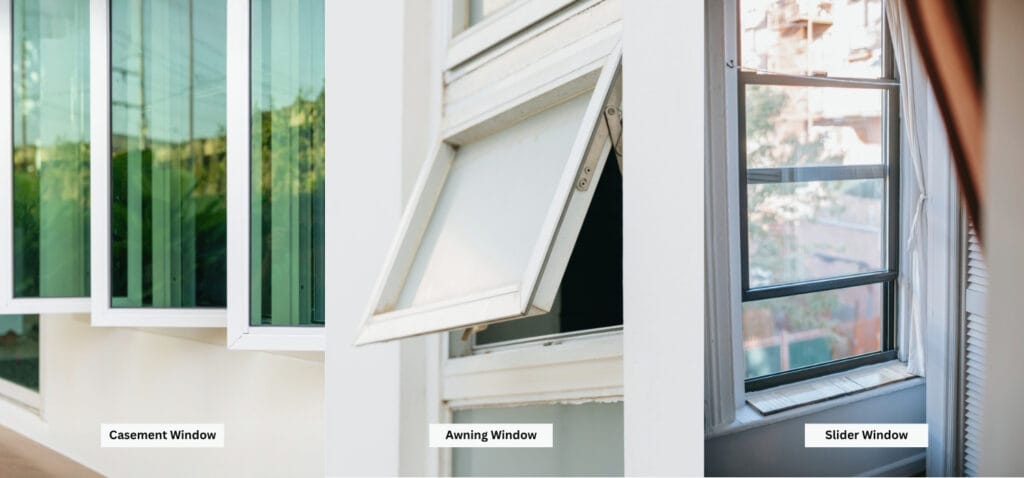
Casement windows are hinged on one side and open outward. Slider windows slide horizontally on a track. Awning windows are hinged at the top and open from the bottom.
Each window type operates differently — determining ventilation capacity, energy efficiency, air leakage risk, and maintenance demands.
How Do Casement Windows Perform in Ontario?
Casement windows are the most energy-efficient window type for Ontario homes — their compression seal eliminates air leaks and their 180-degree range provides excellent ventilation.
Casement windows open outward using a crank handle and provide the tightest seal for energy efficiency. The compression seal presses the sash against the frame when closed, creating a draftlock effect that minimizes air leakage far better than a sliding window.
NRCan’s window buying guide confirms casement windows typically achieve lower U-factors than comparable slider windows. A lower U-factor means better thermal insulation.
Crank windows minimize air leaks and stabilize home temperature. Casement and awning windows are often favored in cold climates for their tight seals. For Ontario homeowners with home energy efficiency as a top priority, casement windows are an excellent choice.
Casement windows open to 90 degrees for easy exterior cleaning without a ladder. For living rooms and bedrooms, they are the popular choice — delivering fresh air and an unobstructed view.
How Do Slider Windows Perform in Ontario?
Slider windows are a practical, low-maintenance option for large horizontal openings — but they offer lower energy efficiency than casement or awning windows due to their sliding track design.
Slider windows are easy to operate with a simple sliding motion. No crank handle is required. They are ideal above a kitchen sink or where outward-opening windows would obstruct access.
Slider windows provide less open area than casement windows. Their sliding track creates more air leakage than a compression seal — making them a less ideal choice for exposed or north-facing walls in Ontario winters.
Their advantages are real: unobstructed views and easy cleaning without a ladder. A sliding window with a multi-point locking system improves security without sacrificing the aesthetic.
For optimal performance in Ontario, ensure slider replacement windows carry ENERGY STAR Canada certification — a U-factor of 1.22 W/(m²·K) or lower, or an ER of 34 or higher under the current v5.0 standard. Energy-efficient windows can improve a home’s energy rating significantly over older unrated units.
How Do Awning Windows Perform in Ontario?
Awning windows are hinged at the top and open from the bottom — they allow ventilation even during light rain and are an excellent choice for kitchens, bathrooms, and high-humidity rooms.
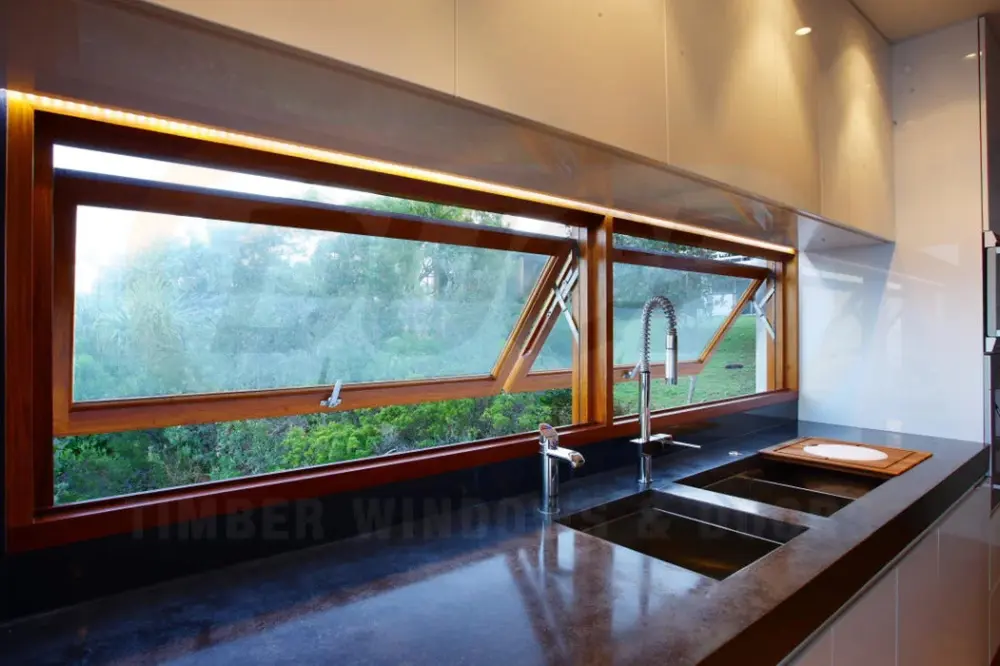
Awning windows open outward from the bottom — light rain falls on the outer surface rather than entering the room. They suit high-humidity rooms where excellent ventilation is needed regardless of the weather.
Awning windows also utilize a compression seal for energy efficiency — similar to casement windows. This gives them significantly better air leakage performance than slider windows. Both casement and awning windows enhance airflow and are often favored in cold climates for their tight seals.
Awning windows should be installed on the ground floor for easy cleaning — they can be wiped from the outside when open. In second-storey applications, occasional cleaning requires more effort than a casement window that opens to 90 degrees.
The natural light benefit of awning windows is real. Positioned above eye level — over a kitchen sink or workbench — they bring in fresh air and natural light. Wall space and privacy are preserved.
Casement vs Slider vs Awning: Side-by-Side Comparison
| Feature | Casement | Slider | Awning |
|---|---|---|---|
| Ventilation | Excellent (180° range) | Moderate (one side only) | Good (even in light rain) |
| Energy efficiency | Excellent | Good | Excellent |
| Air leakage | Very low | Moderate | Very low |
| Best location | Living rooms, bedrooms | Above kitchen sink, wide openings | Kitchens, bathrooms, basements |
| Cleaning | Inside or 90° exterior | Easy sliding, no ladder | Ground floor: easy; upper: occasional |
| Security | High (multi-point lock) | Good (multi-point lock) | High (compression seal) |
| Maintenance | Low | Low | Low |
| Rain ventilation | No | No | Yes |
How Does Window Type Affect Heating Bills in Ontario?
Casement and awning windows reduce heating costs more effectively than slider windows — their compression seals prevent the air infiltration that drives heat loss in winter.
Air leakage is a major source of residential heat loss in Canadian homes. A poorly sealed window at -20°C forces the heating system to work harder continuously. In north-facing rooms, the difference between a compression seal and a sliding track shows up on the heating bill across a full Ontario winter.
What Is a Draftlock Window?
A draftlock window uses a compression mechanism to create an airtight seal when closed — eliminating the air gap that standard sliding windows allow between sash and frame.
Casement and awning windows achieve draftlock performance through their crank mechanism. The sash is physically pressed into the frame gasket when closed. Slider windows cannot replicate this seal because the sash must slide freely past the frame.
For Ontario homeowners, draftlock performance matters most in north-facing bedrooms, basements, and kitchens. Specifying compression-seal windows in these locations delivers the fastest return in comfort and energy savings.
The most common mistake is choosing a window type based on style alone. Aesthetics matter. But in Ontario’s climate, energy efficiency and air leakage performance determine real-world comfort and energy costs for 20–30 years.
The second mistake is using outdated performance targets. ENERGY STAR Canada v5.0, effective January 2020, sets one national standard: U-factor ≤ 1.22 W/(m²·K) or ER ≥ 34. Canada’s three climate zones were eliminated in that update. Any reference to “Ontario’s climate zone” or a U-value of 1.4 is pre-2020 data.
The third mistake is skipping Energy Star certification entirely. Energy Star-rated windows meet minimum performance standards for Canadian conditions. Draftlock windows with Energy Star ratings are the baseline for any Ontario replacement window project — not an optional upgrade.
Low-E coating technology reduces harmful UV rays while maintaining natural light. Specify Low-E glass on any replacement windows for Ontario to protect furnishings and improve thermal performance simultaneously.
Why Doormatic for Replacement Windows in Ontario
Doormatic installs casement, slider, awning, and double hung windows across Toronto, Woodbridge, and the Greater Toronto Area. Our team assesses each room, opening, and exposure before recommending the best windows.
- Energy Star-rated replacement windows for Ontario’s climate
- Casement, slider, awning, and double hung options
- Multi-point locking systems on all windows and doors
- Low-E glass and draftlock performance as standard
- Free quote — no hidden fees, transparent pricing
- Workmanship warranty on every installation
Frequently Asked Questions
Which window is most energy efficient for Ontario homes: casement, slider, or awning?
Casement and awning windows are the most energy efficient for Ontario homes. Both use a compression seal that eliminates air leaks more effectively than slider windows. Casement windows provide the tightest seal and the lowest U-factor. For maximum ventilation and energy efficiency combined, casement windows are the best windows for most Ontario living spaces.
Are awning windows a good choice for Ontario kitchens and bathrooms?
Yes. Awning windows are an excellent choice for Ontario kitchens and bathrooms. They allow fresh air and natural light even during light rain. Their compression seal delivers the same energy efficiency as casement windows. They suit high-humidity rooms where ventilation is needed year-round. Install on the ground floor for easy occasional cleaning.
What are crank windows and are they better than slider windows?
Crank windows — casement and awning types — use a crank handle to open the sash outward. They are better than slider windows for energy efficiency and air leakage performance in Ontario’s climate. Crank windows minimize air leaks and stabilize home temperature through compression sealing. They are the popular choice for Ontario homeowners prioritizing thermal insulation and long-term energy costs.
What should I look for in replacement windows for Ontario?
Look for ENERGY STAR Canada v5.0 certification — a U-factor of 1.22 W/(m²·K) or lower, or an ER of 34 or higher. Low-E glass coating and a multi-point locking system round out the spec. Casement and awning windows deliver the best energy efficiency. Ensure draftlock or compression-seal designs are specified — they reduce air leakage significantly in Ontario’s freeze-thaw climate.
Do slider windows have a place in Ontario homes?
Yes — slider windows are a practical, low-maintenance option for large horizontal openings where outward-opening windows aren’t suitable. A slider window with Energy Star certification and a multi-point locking system performs well above a kitchen sink or wide opening. Pair with casement or awning windows elsewhere for the best overall energy efficiency across the home.
Conclusion
For most Ontario homes, casement and awning windows deliver the best energy efficiency and air leakage control. Slider windows suit large horizontal openings where outward operation is impractical. The right window for each room depends on exposure, function, and whether rain ventilation is needed.
Specify ENERGY STAR Canada v5.0-certified, Low-E glass windows with compression seals. Your home will be warmer, quieter, and cheaper to heat.
Contact Doormatic for a free quote on replacement windows across Toronto, Woodbridge, and the Greater Toronto Area. Call 416-722-6595, email info@doormatic.ca, or visit us at 180 Trowers Rd, Woodbridge, ON L4L 8A6.