By the Doormatic Installation Team | Toronto & GTA Garage Door Specialists
For most Toronto homeowners with an attached garage, insulated garage doors are worth it — they reduce heat loss, lower energy costs, improve comfort, and last longer in Ontario’s freeze-thaw climate. Non-insulated doors suit detached storage garages where thermal performance isn’t a priority. The right choice depends on how your garage connects to your home, how you use the space, and your budget for the project.
Doormatic specializes in garage door installation, repair, and sales across Toronto and the Greater Toronto Area. Rated [4.8 (54) reviews on Google], our experienced garage door experts deliver quality work and customer satisfaction on every job while also improving your home’s curb appeal.
What Is the Difference Between Insulated and Non-Insulated Garage Doors?
Insulated garage doors have foam injected or bonded between the door’s steel layers, giving them an R-value that resists heat transfer. Non-insulated doors are a single layer of steel or aluminum with no thermal barrier.
Insulation is measured by R-value — the higher the number, the better the door resists heat loss. Polyurethane insulation eliminates air gaps between foam and steel skin, outperforming polystyrene boards at equivalent thickness. Insulated steel doors provide the best balance of value, durability, and energy efficiency for Ontario.
Non-insulated doors are lighter, simpler, and lower in cost — practical for a detached storage garage where thermal performance isn’t a priority.
Does an Insulated Garage Door Actually Save Energy?
Yes — an insulated garage door can meaningfully reduce heat loss in an attached garage, directly affecting heating costs in adjacent rooms through the shared wall, floor, or ceiling.
NRCan recommends a minimum R-12 for attached garages in Ontario. Quality perimeter weather seals and bottom rubber seals help prevent drafts — nearly as important as the insulation itself. A well-sealed non-insulated door in a detached garage may be entirely adequate — a poorly sealed insulated door underperforms its rated R-value.
Homeowners who upgrade from non-insulated to insulated on an attached garage consistently notice the difference in winter — particularly in rooms above or beside the garage.
What Are the Other Benefits of Insulated Garage Doors?
Beyond energy efficiency, insulated garage doors are quieter, more structurally rigid, and better suited to Toronto’s temperature swings than non-insulated equivalents.
Key benefits beyond thermal performance:
- Noise reduction: Foam core dampens vibration and motor noise — meaningful when bedrooms or living areas sit above or beside the garage
- Structural strength: Insulated steel is more resistant to denting than single-layer doors — important for the largest moving object in most homes
- Temperature control: Reduces heat loss in attached garages used as workshops, gyms, or hobby spaces
- Security: Reinforced multi-layer construction adds rigidity and supports smart opener integration
- Longevity: Handles freeze-thaw cycling better, reducing panel stress and seal degradation
Garage door installation typically takes 4–6 hours. Insulated doors’ additional weight requires correct spring tension calibration — one reason professional installation is essential.
Which Garage Door Type Works Best for Toronto Homes?
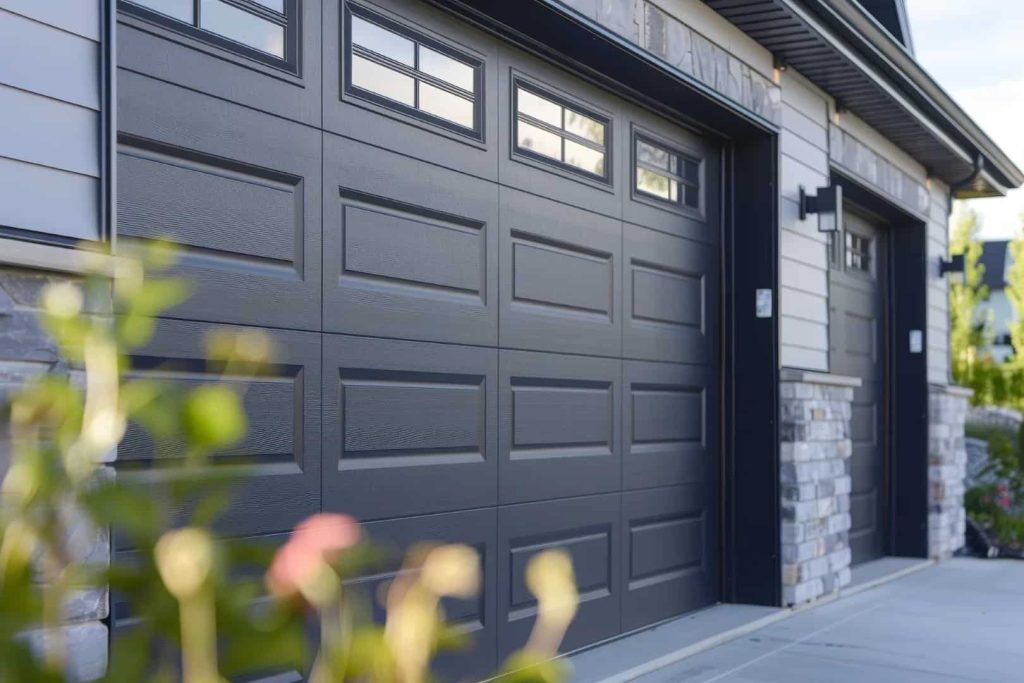
For Toronto’s climate, an insulated steel sectional door in the R-12 to R-16 range is the most practical choice — the most popular material for its durability, low maintenance, and insulation compatibility.
Common door types and how they interact with insulation:
- Sectional doors: The most common type across Toronto and Ontario. Available in insulated and non-insulated steel with polyurethane or polystyrene fill options.
- Steel doors: Durable and low-maintenance — the most popular material for residential and commercial garage doors in the GTA.
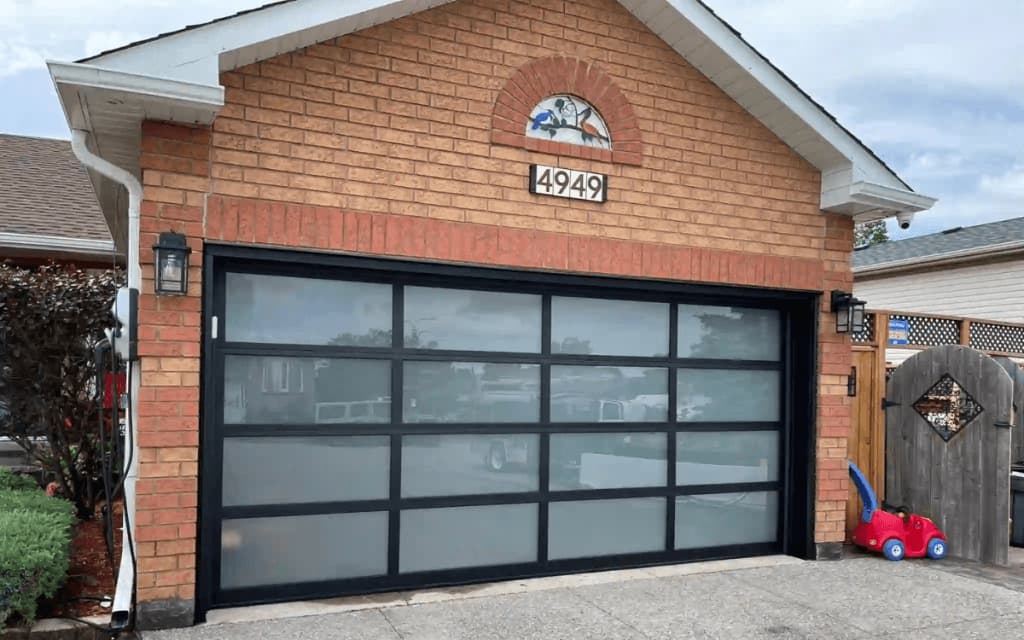
- Aluminum and glass: Ideal for modern homes, allowing maximum light. Require careful insulation specification for attached garages.
- Wood and composite: Premium natural look with moisture resistance — regular maintenance is necessary in Ontario winters.
- Fibreglass: Resistant to dents and suited to high-humidity environments.
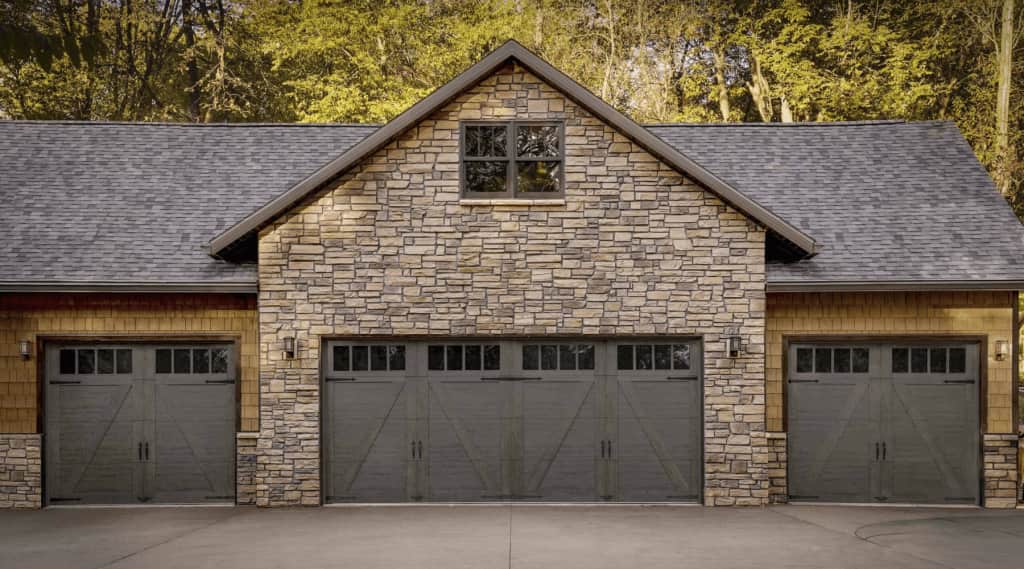
- Carriage house: Operate as sectional doors with decorative hardware — available in insulated steel.
- Roll-up/roller: Horizontal slats that roll up around a drum. Used predominantly for commercial garage doors and where overhead space is limited.
Single-car garage doors are typically 8–9 feet wide; double-car doors are usually 16 feet wide. Custom sizing available for larger projects.
When Is a Non-Insulated Door the Right Choice?
A non-insulated garage door is the right choice for a detached garage used primarily for storage, with no adjacent living spaces and no thermal performance requirement.
Insulation is less critical for detached storage garages. A non-insulated steel door delivers reliable security, low maintenance, and a lower purchase price with no meaningful trade-off for its intended use.
Non-insulated doors are also chosen for commercial garage doors where spaces are independently climate-controlled and high-cycle ratings are the primary specification.
For a detached, unheated garage used for parking or seasonal storage, a non-insulated door with quality seals and a reliable opener is the sensible choice.
What Garage Door Openers Work With Insulated Doors?
Garage door openers can be installed with new garage doors. Most garage door openers are compatible with insulated sectional doors — but the motor must be rated for the door’s increased weight.
LiftMaster openers offer smartphone control, battery backup, and rolling code security — among the most specified in Toronto. Belt garage door openers offer near-silent operation — preferred for attached garages. Chain garage door openers are cheaper and long-lasting — suited to detached garages on a tighter budget.
Electric garage door openers are standard on new garage door installation jobs — installed in the same service call to ensure motor rating, drive type, and sensors are matched correctly.
What Most Homeowners Get Wrong About Insulation Ratings
The most common mistake is buying a door on R-value alone without checking the construction type. Polyurethane-injected doors achieve their stated R-value consistently across the full panel. Polystyrene-insert doors can have thermal bridging at the edges and joints, reducing real-world performance below the rated figure.
The second mistake is treating door insulation as a substitute for weatherstripping. A high R-value door with failed perimeter seals loses much of its thermal benefit through air infiltration. Professionally installed doors include correctly fitted seals as part of the job.
Every Doormatic installation includes a full perimeter seal check before sign-off — quality work that ensures insulation performs as specified from the first winter.
Why Doormatic for Garage Door Installation in Toronto
Doormatic is a knowledgeable garage door company serving homeowners and businesses across Toronto and the GTA. Our experienced technicians specialize in insulated and non-insulated residential and commercial garage doors — from a new garage door on a North York family home to larger projects on commercial properties.
When you hire Doormatic, you know exactly what to expect. We handle the complete job — from helping you choose the right style and features, including windows and custom panel options, to expert installation that leaves your home cool, secure, and fully operational. Whether you own garage doors on a single residential property or manage multiple buildings, our team delivers the same professional standard every time. Your installer will walk you through a final handover so you can rest assured you understand how to operate and maintain your new door. Note that emergency services are available when something goes wrong outside regular hours — because convenience means being there when you need us.
- Experienced, insured technicians on every installation
- Free quote — no service call fee, no obligation
- Full range: insulated steel, aluminum, wood composite, commercial garage doors
- Door repair, opener installation, and maintenance services
- Emergency services available year round across the GTA
- Year round: Toronto, North York, East York, Mississauga, and the GTA
Frequently Asked Questions
Are insulated garage doors worth it for Toronto homes?
For attached garages in Toronto, insulated garage doors are worth the investment. They reduce heat loss, improve comfort in adjacent rooms, and perform better through Ontario’s freeze-thaw cycles. For detached storage garages, a non-insulated door is adequate. Doormatic’s experienced technicians assess your specific garage and recommend the right spec — free quote available across Toronto and the GTA.
What R-value do I need for a garage door in Ontario?
NRCan recommends a minimum R-12 for attached garages in Ontario. Polyurethane-insulated garage doors typically achieve R-16 or higher, outperforming polystyrene alternatives. For detached garages, R-value is less critical. Doormatic supplies garage doors across the full R-value range — our team provides a recommendation based on your garage type and usage during your free quote visit.
How long does garage door installation take?
Garage door installation typically takes 4–6 hours — covering removal of the existing door, panel assembly, track mounting, spring calibration, and opener installation. Commercial garage doors or larger projects may take a full day. Doormatic confirms the time estimate at booking.
Can I do a service call for door repair without replacing the full door?
Yes. A door repair service call covers isolated issues — broken springs, worn rollers, or a failed opener — without full replacement. If the existing garage door is structurally sound and under 15 years old, targeted repair is almost always the right call. Doormatic’s technicians assess your door honestly and recommend only the quality work the door actually needs.
How do I get a free quote for new garage doors in Toronto?
Contact Doormatic by phone or online form to schedule a free quote. A certified technician assesses your garage door or opening and provides a written estimate — no service call fee, no obligation. We cover Toronto, North York, East York, Mississauga, and the Greater Toronto Area for residential and commercial garage doors
Conclusion
For most Toronto homeowners with an attached garage, insulation is worth it — better comfort, lower energy costs, longer service life. For detached storage garages, a non-insulated door with quality seals is the practical choice.
The decision comes down to how your garage connects to your home and how you use the space.
Contact Doormatic for a free quote — experienced technicians, year round service across Toronto and the Greater Toronto Area.