By the Doormatic Installation Team | Toronto & GTA Garage Door Specialists
Replacing a garage door in North York follows a clear sequence — assessment, removal, installation, and calibration — and when done by professional technicians, it completes in a single day. Whether you’re upgrading an existing garage door for energy efficiency, dealing with a broken spring, or fitting a new garage door during a renovation, this guide covers every step Ontario homeowners need before the work begins.
Doormatic specializes in residential and commercial garage door installation, replacement, and repair across North York and the GTA. Rated [4.9, 1393 reviews on Google and the web]
our team delivers quality work and customer satisfaction on every job.
What Are Garage Doors North York Homeowners Actually Replacing?
Most North York homeowners replace their garage door for one of four reasons: age and deterioration, poor insulation and energy loss, a broken spring or failed cables, or a style upgrade tied to a renovation.
Understanding which category applies to your situation shapes every decision that follows — material, insulation rating, opener type, and budget. North York’s housing stock spans post-war bungalows in Willowdale, mid-century semis in Bathurst Manor, and newer builds in Bayview Village. Each property type presents different door sizing, ceiling clearance, and structural constraints that a professional technician assesses before any replacement begins.
At Doormatic, we’ve found that over 60% of North York garage door replacements involve doors that are non-insulated, undersized for modern vehicles, or paired with an automatic opener that no longer handles the door’s weight reliably. In many cases, the existing garage door has outlived its rated spring cycle count — typically ranging from 10,000 to 20,000 cycles depending on spring type — without the homeowner realising it. Once a spring has passed that cycle count, our team pricing garage doors in North York checks the opener and cables on the same visit rather than swapping the spring alone.
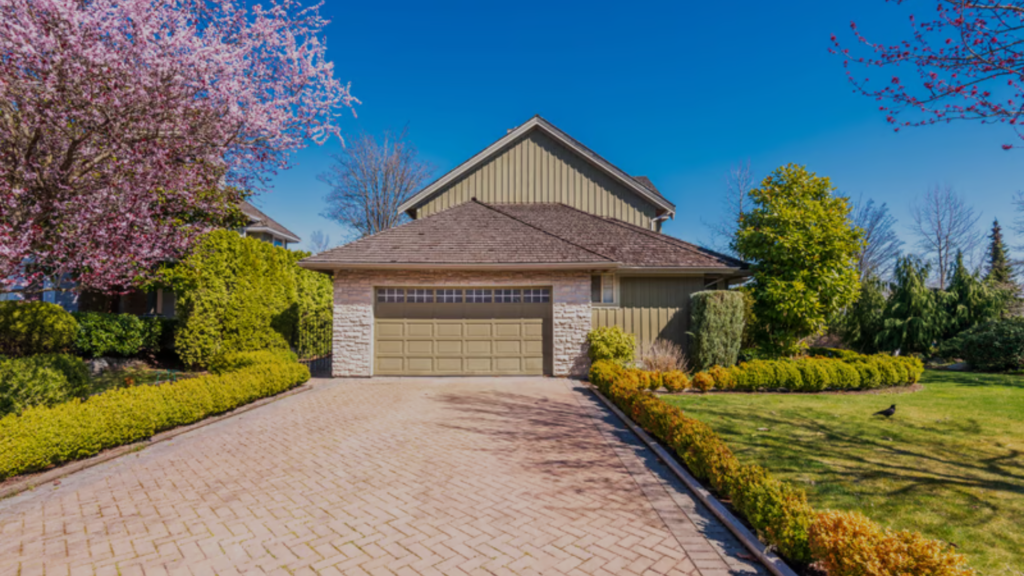
Step 1 — How Is the Existing Garage Door Assessed Before Replacement?
A professional technician assesses four things before removal: rough opening dimensions, spring system type, headroom and side room clearance, and the condition of tracks, cables, and hardware.
This step determines what new garage door fits, which components need replacing alongside the door, and whether the opener is compatible with the new door’s weight. Skipping it — common in DIY projects or rushed quotes — leads to poor installation, misaligned tracks, and premature spring failure.
North York’s older properties frequently have non-standard opening widths built to 1960s vehicle dimensions. Our local technicians measure every dimension before ordering. The assessment also flags whether structural modifications — header reinforcement or electrical upgrades for opener installation — are needed before door installation begins.
Step 2 — How Is the Old Garage Door Removed Safely?
Safe removal requires releasing spring tension completely before any panel is detached — torsion springs store enough mechanical energy to cause serious injury if released without control.
This is why garage door replacement is not a DIY project — not the panel weight, but the spring system. Our insured technicians release tension using calibrated winding bars before disconnecting garage door cables, removing panels bottom-up, and extracting the track assembly. A standard residential removal takes 45–90 minutes done correctly.
Hardware, brackets, and tracks are inspected during removal. Worn rollers, frayed cables, or corroded hardware are flagged and replaced as part of the same job.
Step 3 — What Does New Garage Door Installation Involve?
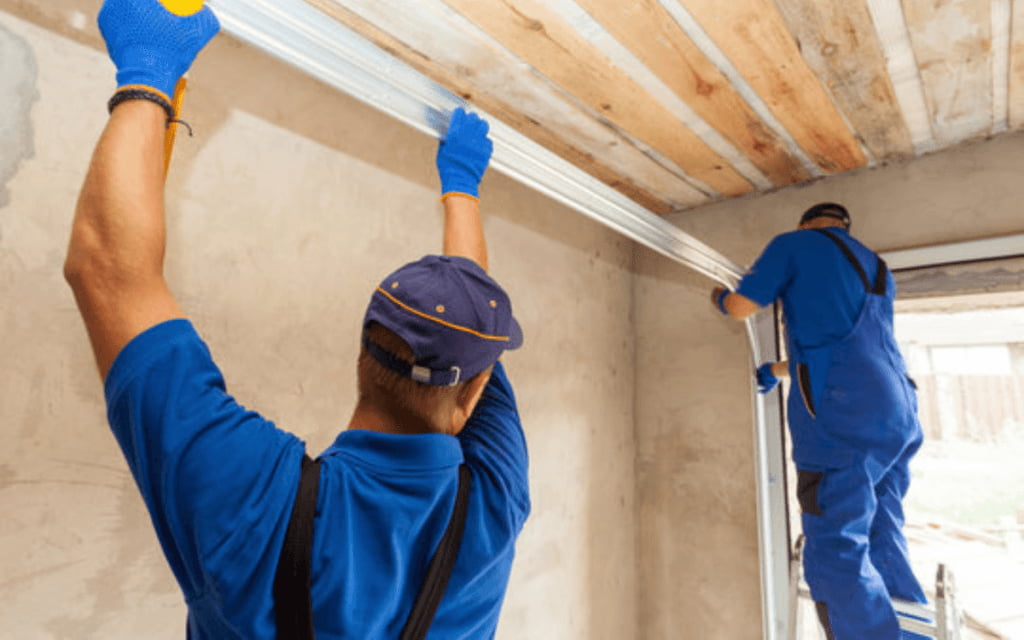
Professional garage door installation covers track mounting, panel assembly from the bottom section up, spring installation and tension calibration, cable routing, and a full operational test before the technician leaves.
Tracks are mounted plumb and level before any panel is hung. Bottom panels go in first, working upward. The spring system — torsion spring for most North York residential doors, extension springs on older or low-headroom installations — is fitted and tensioned last.
Spring calibration is critical. Too loose and the opener motor strains under the door’s weight. Too tight, and the door shoots up under its own force. Correct tension means the door holds position at any point in its travel — fully open, fully closed, or mid-swing. That balance is what ensures smooth operation across the door’s full lifecycle.
All Doormatic installations are backed by a workmanship warranty. If the door doesn’t operate correctly after handover, we return and resolve it at no charge.
Step 4 — How Does Garage Door Opener Installation Work?
Garage door opener installation involves mounting the drive unit to the ceiling, attaching the rail to the door header, connecting the trolley to the top panel bracket, wiring the wall button and safety sensors, and programming remotes.
Belt-drive openers suit attached garages where noise travels into living areas. Chain-drive units are more economical for detached garages. Commercial garage doors require a higher-torque or commercial-rated operator. Ontario Building Code mandates safety reversal sensors on all new opener installations — every unit Doormatic installs is code-compliant and sensor-tested before sign-off.
Features worth specifying on new garage door openers in North York:
- Battery backup: Essential during GTA ice storm outages
- Wi-Fi connectivity: Remote access via smartphone — useful for rentals and frequent travellers
- Thermal protection: Prevents motor burnout in extreme cold
- Rolling code technology: Generates a new code on every activation for enhanced security
Step 5 — What Happens During the Final Check and Handover?
The final check covers balance testing, auto-reverse calibration, sensor alignment, travel limit settings, and a full manual and automatic operation cycle — the door doesn’t leave the site until every test passes.
Balance testing disconnects the door from the opener and raises it manually to mid-travel. A correctly calibrated door holds position without drifting. Auto-reverse is tested with a 2×4 flat on the floor — the door must reverse immediately on contact, as required under Ontario safety standards.
The technician walks the homeowner through manual release, remote programming, and maintenance basics — lubrication points, seasonal checks, and early warning signs of spring or cable wear.
What Garage Door Should North York Homeowners Choose?
For North York’s climate and housing stock, insulated steel doors in the R-12 to R-16 range deliver the best balance of durability, energy efficiency, and low maintenance across both residential and commercial properties. For example, purchasing an insulated garage door replacement is a worthwhile investment for improving energy efficiency and comfort. Insulated garage doors can have R-values as high as 18.4. High R-values are crucial for reducing heat loss in cold climates.
Garage doors can be made from wood, steel, aluminum, or glass. Wind-rated doors are necessary to handle high-wind events due to changing weather patterns. Roll-up garage doors are known for high security and low maintenance. Modern aluminum and glass doors are ideal for contemporary homes and allow natural light.
Here’s how the main options compare:
| Door Type | R-Value | Best For | Lifespan |
|---|---|---|---|
| Insulated Steel | R-12 to R-18 | Attached garages, energy efficiency | 20–30 years |
| Non-Insulated Steel | R-0 to R-4 | Detached garages, budget builds | 15–20 years |
| Wood | R-2 to R-4 | Custom style, heritage homes | 10–20 years |
| Aluminum | R-6 to R-10 | Modern builds, full-view designs | 15–20 years |
| Fibreglass | R-6 to R-12 | High-humidity or coastal exposure | 15–25 years |
Wood suits custom and heritage properties but requires repainting and resealing every 2–3 years. Aluminum and fibreglass work well for modern builds. For most North York residential and commercial properties, insulated steel at an affordable price delivers the best long-term value. NRCan recommends a minimum R-12 door for attached garages in Ontario — the baseline Doormatic applies on every residential replacement.
What Most Homeowners Get Wrong About Garage Door Replacement in North York
Poor installation is the single biggest source of premature garage door failure — more common than faulty parts, and entirely avoidable. Considerring size of the garage’s opening is also crucial. For instance garage doors are typically 8-9′ wide and 7-8′ high for single-car garages. For double-car garages, garage doors are typically 16′ wide and 7-8′ high.
The most frequent mistake: choosing a garage door installer on price alone without confirming liability insurance, permit compliance, and a post-installation balance test. A door installed without proper spring calibration wears rollers and tracks unevenly, strains the opener motor, and fails early — costing more in repair services than the original savings.
The second mistake is treating garage door spring replacement as a standalone fix when the full system is at end-of-life. Replacing springs on a door with corroded panels, worn cables, and a failing opener buys 1–2 years at best. When several factors are failing simultaneously, full replacement at an affordable price is the smarter 5-year decision.
At Doormatic, Ontario homeowners get an honest call — necessary repairs when the door has life left, full replacement when the numbers support it.
Why Doormatic for Garage Door Replacement in North York
Doormatic specializes in residential and commercial garage door installation and replacement across North York and the GTA. Rated [4.8, 669 reviews on Google], our company delivers expert installation focused on customer satisfaction and quality work — no shortcuts, no subcontracting. Note that we have been in this business for many years now and understand the technical nuances that a garage door installation involves.
- Local, insured technicians who know North York properties
- Free quote — no service call fee, no obligation
- Same day service for emergency repairs and broken spring replacement
- All installations backed by a workmanship warranty
- Garage door opener installation on every replacement job
- Year round service: North York, downtown Toronto, East York, and the GTA
Frequently Asked Questions
How long does garage door installation take in North York?
Most residential garage door installations in North York take 3–5 hours from start to finish — covering removal of the existing garage door, panel installation, spring calibration, and garage door opener installation. Commercial garage door installations on larger openings or custom configurations may take a full day. Doormatic confirms the time estimate at booking so you can plan your day around the service call without surprises.
What are garage doors North York homeowners most commonly replacing?
North York homeowners most commonly replace non-insulated doors on older detached garages, undersized doors on post-war bungalows that no longer fit modern vehicles, and doors with failed torsion springs or worn garage door cables on systems over 15 years old. Style upgrades tied to exterior renovations are also frequent — particularly in Willowdale, Bathurst Manor, and Bayview Village, where curb appeal improvements directly affect resale value.
Is garage door opener installation included in a replacement?
Opener installation is available as part of every garage door replacement at Doormatic and is recommended when the existing unit is over 10 years old, lacks battery backup, or isn’t rated for the new door’s weight. New garage door openers in North York must meet Ontario Building Code safety sensor requirements — Doormatic installs only code-compliant units. A free quote covers both the door and opener so you have the complete cost before committing.
Can I get same day service for a broken spring or commercial garage door repair in North York?
Yes. Doormatic offers same day service across North York for broken spring replacement, garage door cable failures, doors off-track, and commercial garage door repair. A broken spring leaves your garage inoperable and is a safety hazard — our expert technicians carry the most common torsion and extension spring sizes on every service vehicle to complete most repairs in a single visit. Call directly for same day bookings or use the online form for next-day service.
How do expert technicians handle garage door cables during installation?
Garage door cables route through the bottom bracket on each side, up through cable drums on the torsion bar, and are tensioned as part of spring calibration. During professional installation, cables are inspected for fraying, kinking, or incorrect gauge — substandard cables are replaced, not reused. Doormatic’s expert technicians test cable tension and drum alignment on every installation as part of the final operational check, confirming smooth operation from day one. Garage door cables last around 8 to 15 years.
Conclusion
Garage door replacement in North York is a structured, sequential job — each step depends on the one before it. Skip any phase, and you get the poor installation outcomes that drive most repair service calls. Done correctly by professionally installed standards, a new garage door delivers 20–30 years of secure, energy-efficient, smooth operation.
Whether you need a new garage door, spring replacement, opener installation, or just a free quote — Doormatic’s local team is ready.
Your Garage Door is Our Top Priority
Contact Doormatic today for a free quote — same-day service available, insured technicians, year-round across North York and the Greater Toronto Area.
Professional Service|Quality Work|Expert Installation|Door, Windows, and, Garage Door Service Specialists|doormatic.ca|